
SEP Alkayasí · CEPER 500 Viviendas
SEP Alkayasí · CEPER 500 Viviendas
SdA 6 · Clase 1
El ferry a Nador · "To be" en pasado




| Bloque | Min | Contenido |
|---|---|---|
| 1. Listening | 10 | Escucha de la narración + comprensión global |
| 2. Reading | 15 | The Story + comprensión detallada |
| 3. Language Lab | 25 | "To be" en pasado simple (was/were) |
| 4. Vocabulary Lab | 15 | 10 palabras clave |
| 5. Production | 15 | Speaking + Writing guiados |
| 6. Mediation | 8 | Mediación lingüística |
| 7. Sing Along | 2 | Otis Redding — "Sitting On The Dock Of The Bay" (1968) |
Escucha el audio de la narración (sin leer el texto) y marca Verdadero (V) o Falso (F).
🎧 Coloca el archivo audio/sda6_sesion1_story.mp3 junto a este HTML para que suene aquí.
1. Julio, Itto and Zahra travel from the port of Almería. →
2. The sea is very rough during the crossing. →
3. The crossing takes about four hours. →
4. Zahra is going to see her parents in Nador. →
5. The taxi driver is unfriendly. →
El ferry a Nador · Itto empieza a contarle el viaje a Majda
🎧 Coloca el archivo audio/sda6_sesion1_story.mp3 junto a este HTML para que suene aquí.
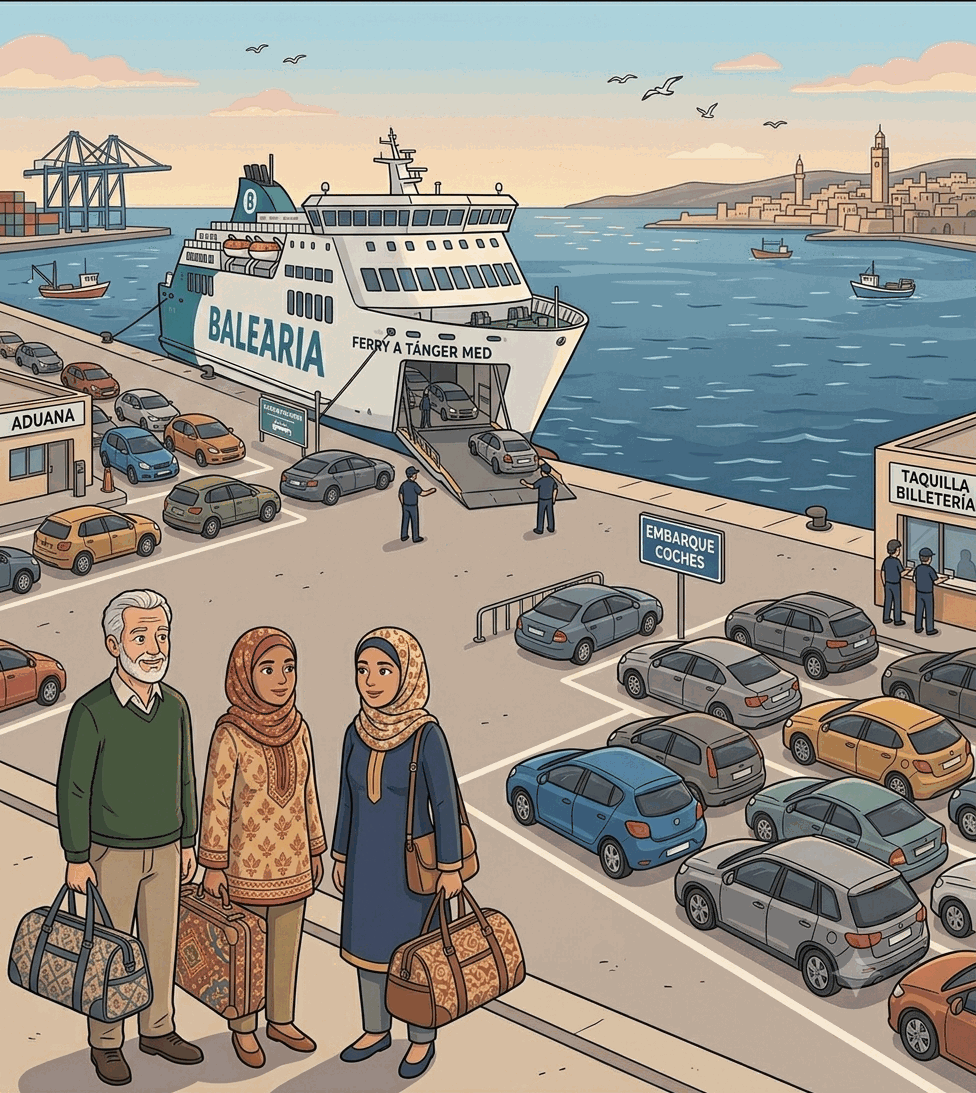
It is January 2023, and Majda has just moved in with Julio and Itto after a difficult time. One quiet evening, Itto starts telling her about the family trip to Morocco last December. Julio, Itto and Zahra were at the port of Almería very early in the morning. The port was busy, and there were long queues of cars waiting for the ferry. Zahra was quiet but happy, because her parents were waiting for her in Ouaoumana. The crossing to Nador was calm, and the sea was blue and still. After a four-hour crossing, the ferry finally arrived in Nador, and the three travellers walked to the taxi rank near the port. The taxi driver was talkative and friendly, and the road to the airport wasn't very long. "Was the trip difficult so far?" Majda asks quietly. Itto smiles: "Not yet... the difficult part was waiting for us at the airport."
Forma: I/He/She/It + was; You/We/They + were.
Afirmativa: Julio was at the port. They were early.
Negativa: wasn't / weren't → The sea wasn't rough. They weren't late.
Interrogativa: Was/Were + sujeto...? → Was the crossing calm? Were you tired?
Expresiones de tiempo pasado: last December, in 2022, that morning, four hours ago.
1. ferry /ˈferi/ — trasbordador, ferry.
2. port /pɔːt/ — puerto.
3. deck /dek/ — cubierta (de un barco).
4. crossing /ˈkrɒsɪŋ/ — travesía.
5. immigration /ˌɪmɪˈgreɪʃn/ — control de inmigración.
6. customs /ˈkʌstəmz/ — aduana.
7. to disembark /ˌdɪsɪmˈbɑːk/ — desembarcar.
8. passport control /ˈpɑːspɔːt kənˈtrəʊl/ — control de pasaportes.
9. taxi rank /ˈtæksi ræŋk/ — parada de taxis.
10. fare /feə/ — tarifa (de transporte).
En parejas, imaginad que sois Julio e Itto y contáis a un compañero cómo fue el primer tramo del viaje (puerto, barco, llegada a Nador), usando was/were.
1. Escribe 5 frases sobre un viaje que hiciste tú, usando was/wasn't/were/weren't.
Consuelo, que nunca ha viajado en ferry, pregunta a Julio cómo fue la travesía a Marruecos.
Tarea: El alumnado media la conversación, explicando a Consuelo en español, en términos sencillos, lo que Julio cuenta en inglés sobre el puerto, el barco y la llegada a Nador.
Otis Redding — "Sitting On The Dock Of The Bay" (1968)
Mientras escuchas, piensa en la relación entre el título de la canción y el puerto donde empieza el viaje de esta sesión; anota una palabra en inglés relacionada con el mar que reconozcas.
SdA 6 · Clase 2
Sin coche en el aeropuerto · There was/were
| Bloque | Min | Contenido |
|---|---|---|
| 1. Listening | 10 | Escucha de la narración + comprensión global |
| 2. Reading | 15 | The Story + comprensión detallada |
| 3. Language Lab | 25 | There was/were (+ negativo) combinado con to be |
| 4. Vocabulary Lab | 15 | 10 palabras clave |
| 5. Production | 15 | Speaking + Writing guiados |
| 6. Mediation | 8 | Mediación lingüística |
| 7. Sing Along | 2 | Percy Sledge — "When A Man Loves A Woman" (1991) |
Escucha el audio de la narración (sin leer el texto) y marca Verdadero (V) o Falso (F).
🎧 Coloca el archivo audio/sda6_sesion2_story.mp3 junto a este HTML para que suene aquí.
1. There is a car ready for Julio at the airport. →
2. The rental company makes a mistake with the reservation. →
3. There are many cheap cars available immediately. →
4. Zahra is very surprised about the problem. →
5. The family finally gets a more expensive car. →
Sin coche en el aeropuerto de Nador
🎧 Coloca el archivo audio/sda6_sesion2_story.mp3 junto a este HTML para que suene aquí.
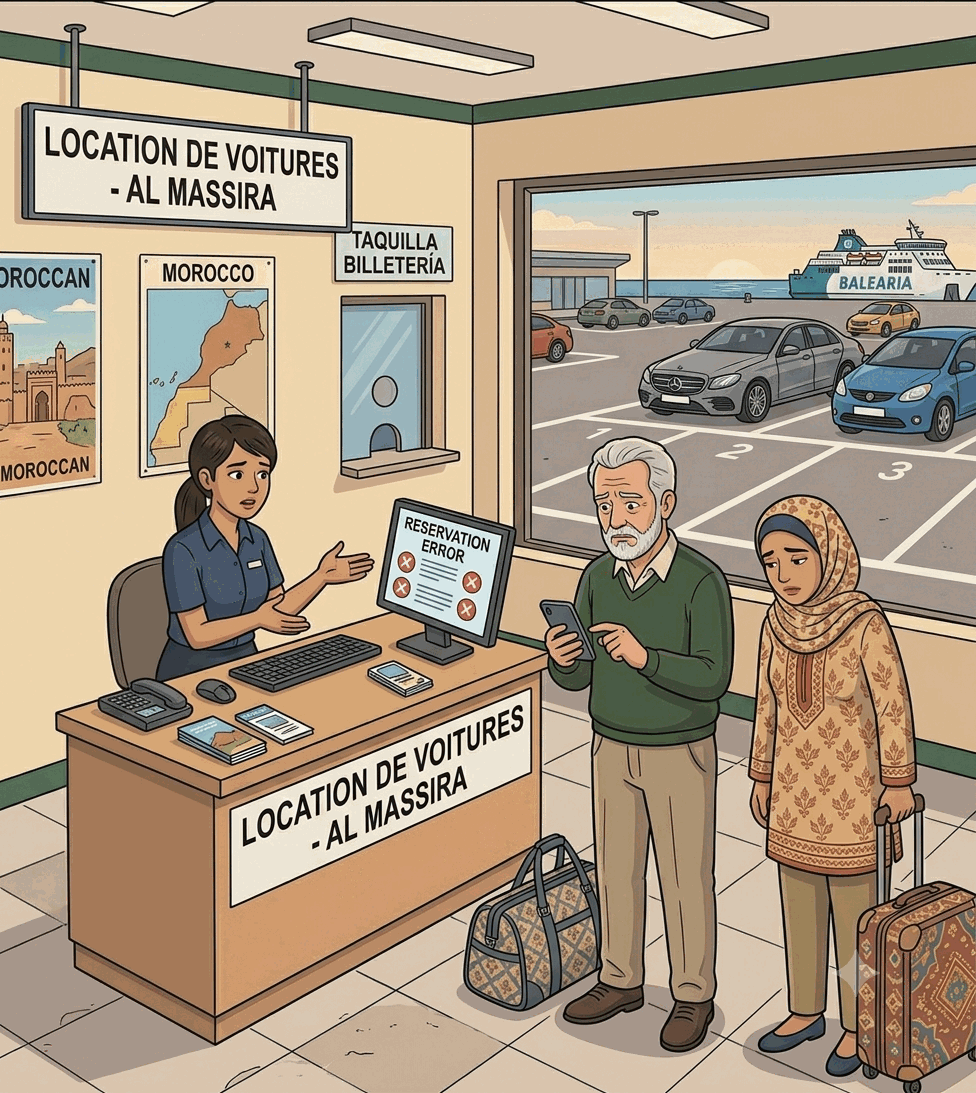
A few days later, Itto continues the story for Majda. At Nador airport, there was a small car rental office in the arrivals hall. Julio showed the booking on his phone, but the woman at the desk looked worried. "I'm sorry," she said, "there isn't a car for you today. There was a mistake with the reservation." There were no other cars available at a normal price, only one expensive car from a different company. Julio wasn't happy about the extra cost, and Itto was tired after the long crossing. There was a long wait while they called several rental offices in Nador. Finally, there was one small car available, much more expensive than the online price. Zahra wasn't surprised at all; she said this kind of problem was common. Two hours late, and with a lighter wallet, the family finally left the airport.
Forma: There + was/were (+ not) + sustantivo.
Singular/incontable: There was a problem. There wasn't a car.
Plural: There were no cheap cars. There weren't any other options.
Interrogativa: Was there a car? Were there any other companies?
Combinado con to be: The office was open, but there wasn't a solution yet.
1. car rental /kɑː ˈrentl/ — alquiler de coches.
2. reservation /ˌrezəˈveɪʃn/ — reserva.
3. to be fully booked /tə biː ˈfʊli bʊkt/ — estar completo, sin disponibilidad.
4. deposit /dɪˈpɒzɪt/ — fianza, depósito.
5. contract /ˈkɒntrækt/ — contrato.
6. insurance /ɪnˈʃʊərəns/ — seguro.
7. key /kiː/ — llave.
8. refund /ˈriːfʌnd/ — reembolso.
9. to complain /tə kəmˈpleɪn/ — quejarse.
10. to overcharge /tʊ ˌəʊvəˈtʃɑːdʒ/ — cobrar de más.
En parejas: uno es el cliente (Julio), el otro el empleado de la empresa de alquiler; recread la conversación sobre el coche que no existe.
1. Escribe una queja breve (email o nota) a la empresa de alquiler de coches explicando el problema.
Pilar, que está planeando un viaje, quiere saber exactamente qué pasó con el coche de alquiler en Marruecos.
Tarea: El alumnado media, explicando en español lo que ocurrió, a partir de los fragmentos en inglés que va aportando Julio.
Percy Sledge — "When A Man Loves A Woman" (1991)
Mientras escuchas, anota si identificas alguna palabra relacionada con sentimientos (feelings) que podría describir cómo se sentía Julio ante el problema del coche.
SdA 6 · Clase 3
El camino a Ouaoumana · Verbos regulares en pasado
| Bloque | Min | Contenido |
|---|---|---|
| 1. Listening | 10 | Escucha de la narración + comprensión global |
| 2. Reading | 15 | The Story + comprensión detallada |
| 3. Language Lab | 25 | Verbos regulares en pasado (-ed) |
| 4. Vocabulary Lab | 15 | 10 palabras clave |
| 5. Production | 15 | Speaking + Writing guiados |
| 6. Mediation | 8 | Mediación lingüística |
| 7. Sing Along | 2 | Perry Como — "Feelings" (1978) |
Escucha el audio de la narración (sin leer el texto) y marca Verdadero (V) o Falso (F).
🎧 Coloca el archivo audio/sda6_sesion3_story.mp3 junto a este HTML para que suene aquí.
1. The family stops for lunch near Fez. →
2. They eat a fish tajine. →
3. The drive to Ouaoumana takes only one hour. →
4. Itto's parents are waiting for them at home. →
5. The family travels on to Khenifra the same evening. →
El camino a Ouaoumana · recogida de los abuelos
🎧 Coloca el archivo audio/sda6_sesion3_story.mp3 junto a este HTML para que suene aquí.
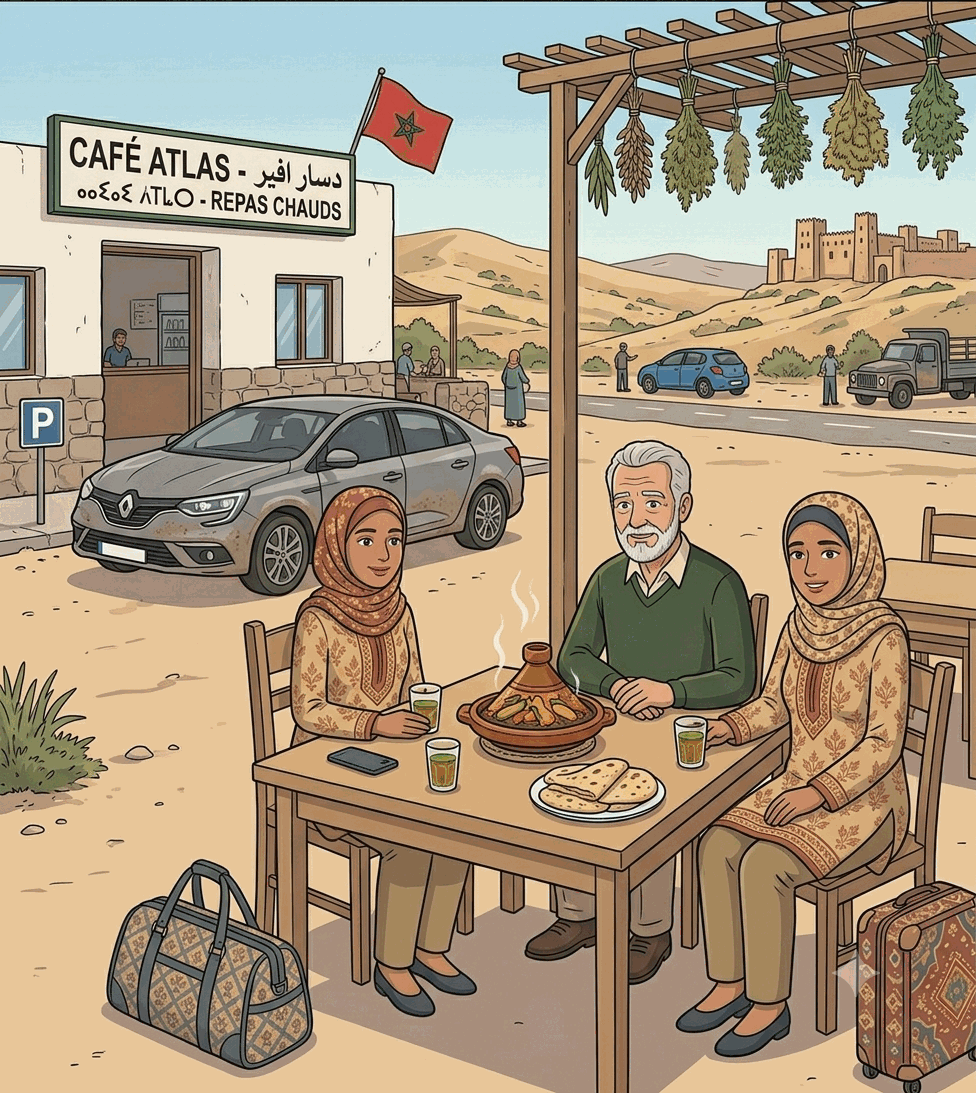
The next evening, Itto tells Majda about the long drive south. The rented car finally left Nador and travelled towards Fez, on a busy motorway full of trucks. Around midday, hungry and tired, they stopped at a roadside restaurant on the outskirts of Fez. The waiter recommended a chicken tajine with olives, and the family rested for almost an hour before continuing. Zahra ordered a sweet mint tea and talked quietly about her parents. After lunch, they walked back to the car and travelled for three more hours through small towns and green hills. Finally, they arrived in Ouaoumana in the late afternoon. Itto's parents, Ali Boukrim and Fátima, waited outside their house, and everyone embraced for a long time. Ali Boukrim cried a little, and Fátima prepared tea immediately. They talked and talked before finally travelling on to Khenifra that same evening.
Forma: verbo + -ed (regulares).
Ortografía: like → liked; stop → stopped (consonante final se dobla); try → tried (y → ied); travel → travelled (inglés británico, dobla la l).
Pronunciación: /t/ (stopped), /d/ (travelled), /ɪd/ (waited, rested), según el sonido final del verbo.
Uso: acciones terminadas en un momento concreto del pasado.
1. roadside restaurant /ˈrəʊdsaɪd ˈrestrɒnt/ — restaurante de carretera.
2. tajine /tæˈʒiːn/ — tayín (guiso marroquí).
3. mint tea /mɪnt tiː/ — té con menta.
4. to stop for a break /tə stɒp fɔːr ə breɪk/ — parar a descansar.
5. grandparents /ˈgrænpeərənts/ — abuelos.
6. to embrace /tʊ ɪmˈbreɪs/ — abrazar.
7. family reunion /ˈfæməli riˈjuːniən/ — reencuentro familiar.
8. hungry /ˈhʌŋgri/ — hambriento.
9. tired /ˈtaɪəd/ — cansado.
10. to arrive safely /tʊ əˈraɪv ˈseɪfli/ — llegar sano y salvo.
En parejas, narrad (en pasado regular) un viaje largo en coche que hayáis hecho, con al menos una parada.
1. Escribe 5 frases sobre lo que hiciste el último verano, usando verbos regulares en pasado.
Francisco, muy curioso, pregunta a Julio qué comieron exactamente durante la parada cerca de Fez.
Tarea: El alumnado media, tomando la descripción en inglés de Julio sobre el tajine y el té, y explicándosela a Francisco en español con detalle.
Perry Como — "Feelings" (1978)
Mientras escuchas, piensa en cómo se sintió la familia (feelings) al reencontrarse con los abuelos, y escribe una palabra en inglés para describir ese sentimiento.
SdA 6 · Clase 4
Una semana fría en Khenifra · Verbos regulares y expresiones de tiempo
| Bloque | Min | Contenido |
|---|---|---|
| 1. Listening | 10 | Escucha de la narración + comprensión global |
| 2. Reading | 15 | The Story + comprensión detallada |
| 3. Language Lab | 25 | Verbos regulares (repaso) + expresiones de tiempo pasado |
| 4. Vocabulary Lab | 15 | 10 palabras clave |
| 5. Production | 15 | Speaking + Writing guiados |
| 6. Mediation | 8 | Mediación lingüística |
| 7. Sing Along | 2 | Pink Floyd — "Another Brick On The Wall" (1982) |
Escucha el audio de la narración (sin leer el texto) y marca Verdadero (V) o Falso (F).
🎧 Coloca el archivo audio/sda6_sesion4_story.mp3 junto a este HTML para que suene aquí.
1. The apartment has a lift. →
2. The flat doesn't have any heating. →
3. Julio buys a tracksuit at the souk. →
4. Zahra goes shopping every day with Julio and Itto. →
5. The apartment is empty of presents by the end of the week. →
Una semana fría en Khenifra · días en el zoco
🎧 Coloca el archivo audio/sda6_sesion4_story.mp3 junto a este HTML para que suene aquí.
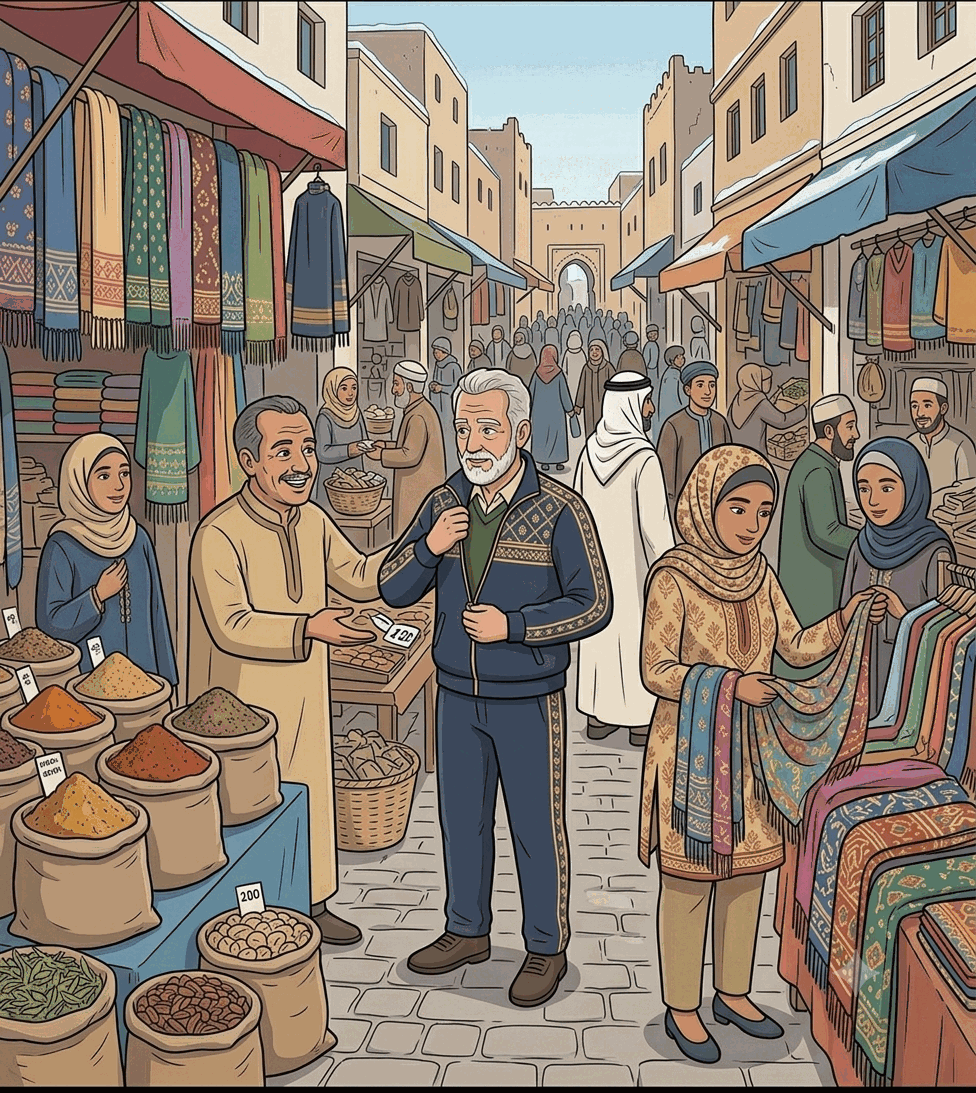
The following week, Itto tells Majda about their stay in Khenifra. The family arrived at a large, comfortable apartment on the third floor of an old building. There wasn't a lift, so everybody carried the suitcases up the stairs. It was very cold that week, and, worse, the apartment didn't have any heating. Itto's mother added extra blankets to every bed. Every morning, Julio and Itto walked to the souk in the centre of Khenifra. Two days after they arrived, Julio bargained for a warm tracksuit and some trainers, while Itto picked colourful scarves and spices for the family. Zahra usually stayed with her parents at home, resting and talking, while the others walked around the crowded market. By the end of the week, the small apartment was full of presents, bags, and happy memories.
Repaso de verbos regulares en -ed + expresiones de tiempo: last December, that week, two days later, every morning (hábito dentro del relato pasado), by the end of the week.
Ejemplos: They arrived last December. Julio bargained two days later.
1. lift /lɪft/ — ascensor.
2. third floor /θɜːd flɔː/ — tercer piso.
3. heating /ˈhiːtɪŋ/ — calefacción.
4. cold /kəʊld/ — frío.
5. souk /suːk/ — zoco.
6. to bargain /tə ˈbɑːgɪn/ — regatear.
7. tracksuit /ˈtræksuːt/ — chándal.
8. wool blanket /wʊl ˈblæŋkɪt/ — manta de lana.
9. present /ˈprezənt/ — regalo.
10. crowded /ˈkraʊdɪd/ — abarrotado, concurrido.
En parejas, describid una casa o piso al que le faltaba algo importante (ascensor, calefacción...) y cómo os adaptasteis.
1. Escribe 5 frases sobre las cosas que compró la familia en el zoco de Khenifra.
Carmen, que también ha vivido en un piso sin calefacción, quiere comparar su experiencia con la de Julio e Itto.
Tarea: El alumnado media entre el relato en inglés de Julio y el español de Carmen, explicando semejanzas y diferencias.
Pink Floyd — "Another Brick On The Wall" (1982)
Mientras escuchas, piensa en la palabra "wall" (pared) y relaciónala con las paredes frías del piso de Khenifra; anota otra palabra relacionada con la construcción que reconozcas.
SdA 6 · Clase 5
El camino a la granja de Abderrahim · Repaso combinado e indicaciones
| Bloque | Min | Contenido |
|---|---|---|
| 1. Listening | 10 | Escucha de la narración + comprensión global |
| 2. Reading | 15 | The Story + comprensión detallada |
| 3. Language Lab | 25 | Repaso combinado (to be + regulares + there was/were) + indicaciones |
| 4. Vocabulary Lab | 15 | 10 palabras clave |
| 5. Production | 15 | Speaking + Writing guiados |
| 6. Mediation | 8 | Mediación lingüística |
| 7. Sing Along | 2 | Pink Martini — "Splendor In The Grass" (2009) |
Escucha el audio de la narración (sin leer el texto) y marca Verdadero (V) o Falso (F).
🎧 Coloca el archivo audio/sda6_sesion5_story.mp3 junto a este HTML para que suene aquí.
1. Ifrane is known as "the Switzerland of Morocco". →
2. Amín and Alí are Zahra's children. →
3. Mustapha works at the national radio in Rabat. →
4. The roads in Morocco are always in perfect condition. →
5. The last two kilometres to the farm are paved with new asphalt. →
El camino a la granja de Abderrahim · excursiones por la provincia
🎧 Coloca el archivo audio/sda6_sesion5_story.mp3 junto a este HTML para que suene aquí.
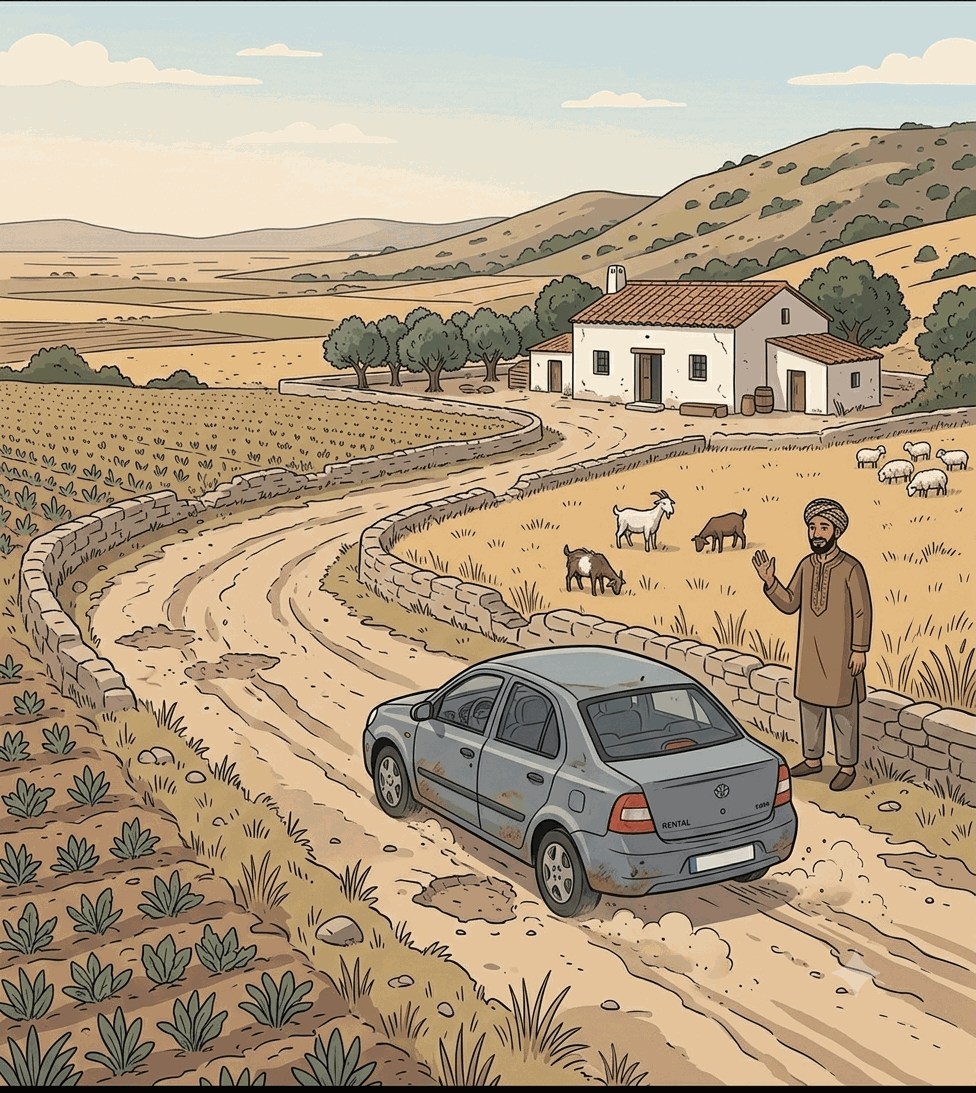
During the last days in Khenifra, Itto explains, the family visited several places nearby. In Ifrane, famous as "the Switzerland of Morocco", there was snow on the ground and the houses looked like alpine chalets. They also visited Meknés and Fez, and drove to Tadla to collect Mustapha's two sons, Amín and Alí, aged nine and six. Mustapha, a journalist, worked almost every day at the national radio station in Rabat, so he joined the family in Khenifra whenever his work allowed it. One morning, they drove to Abderrahim's farm, thirty kilometres from Khenifra. The Moroccan roads were often in poor condition, and there were police checkpoints at almost every roundabout. Many drivers were nervous about traffic fines, and some checkpoints expected a small extra payment to solve problems quickly. The last two kilometres, from the small village to the farm, weren't even paved: the track was full of deep potholes, and the little rental car moved forward very slowly. Abderrahim, not yet married then, was waiting outside, surrounded by his animals and his fields.
Repaso combinado: to be en pasado (was/were), there was/were, y verbos regulares en -ed.
Para dar indicaciones (functional language, presente): Go straight on. Turn left/right. It's on the outskirts of the village.
Ejemplo combinado: There were many checkpoints, and the road wasn't easy, so Julio asked a farmer: "Turn left after the bridge, then go straight on."
1. snowy /ˈsnəʊi/ — nevado.
2. chalet /ˈʃæleɪ/ — chalé (estilo alpino).
3. roundabout /ˈraʊndəbaʊt/ — rotonda.
4. checkpoint /ˈtʃekpɔɪnt/ — control, punto de control.
5. police officer /pəˈliːs ˈɒfɪsə/ — agente de policía.
6. fine /faɪn/ — multa.
7. bumpy /ˈbʌmpi/ — con baches, irregular.
8. pothole /ˈpɒthəʊl/ — bache.
9. livestock /ˈlaɪvstɒk/ — ganado.
10. crops /krɒps/ — cultivos.
En parejas, uno pregunta y otro da indicaciones para llegar a un lugar del pueblo, usando imperativos + vocabulario de carretera.
1. Escribe 5 frases (en pasado) sobre las dificultades del camino hasta la granja de Abderrahim.
Rogelio, muy interesado en los detalles, pregunta a Julio por qué había tanta presencia policial en las carreteras de Marruecos.
Tarea: El alumnado media, explicando en español, de forma sobria y sin juicios de valor, lo que Julio cuenta en inglés sobre los controles y la preocupación de los conductores por las multas.
Pink Martini — "Splendor In The Grass" (2009)
Mientras escuchas, imagina el paisaje verde de los campos de Abderrahim y anota una palabra relacionada con la naturaleza que reconozcas.
SdA 6 · Clase 6
Repaso final de la SdA 6
| Bloque | Min | Contenido |
|---|---|---|
| 1. Review | 10 | Repaso de gramática consolidada |
| 2. Vocabulary Review | 15 | Repaso de vocabulario |
| 3. Final Quiz | 25 | Cuestionario final de 10 preguntas |
| 4. Roleplay | 30 | Roleplay grupal de repaso |
| 5. Sing Along | 10 | Repaso musical de la unidad |
"To be" en pasado (was/were) · There was/were (+ negativo) · Verbos regulares en pasado (-ed) · Expresiones de tiempo pasado · Repaso combinado e indicaciones
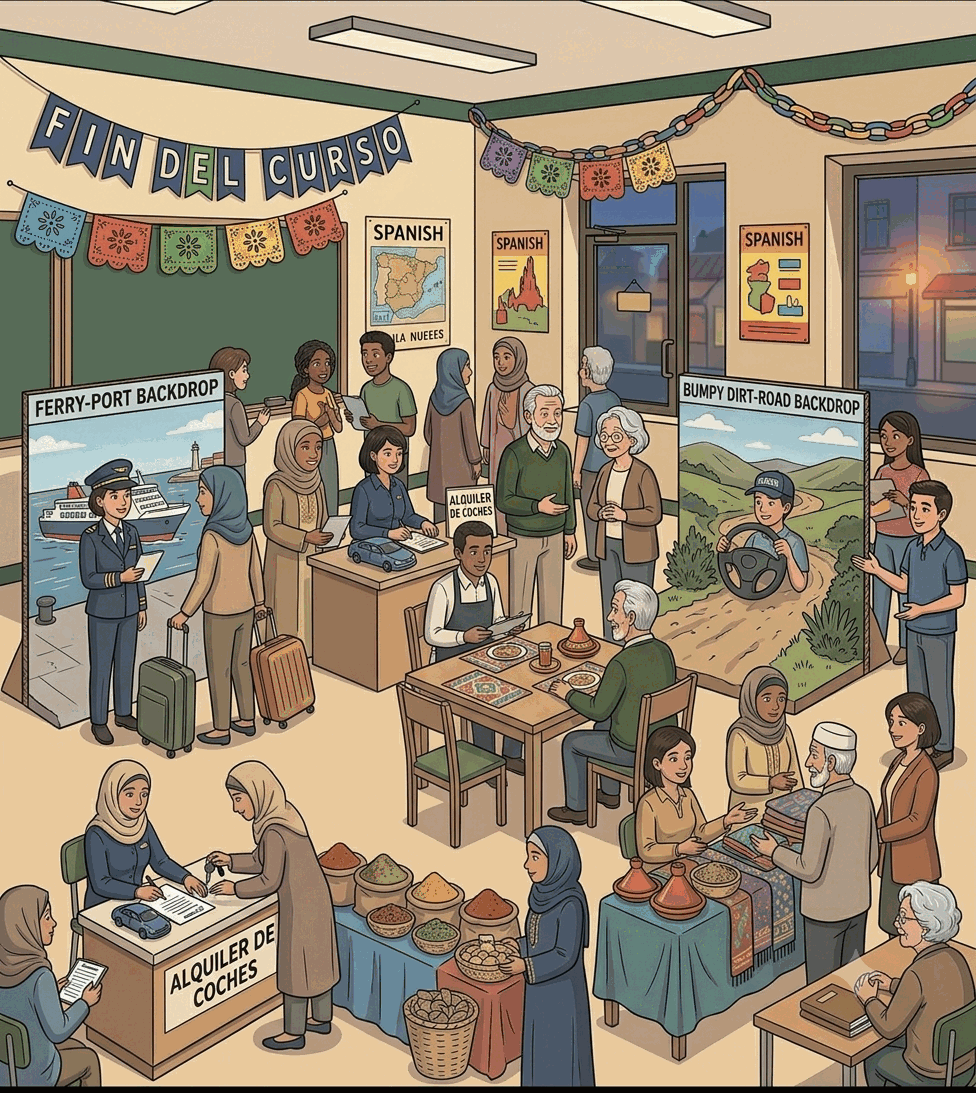
"A Trip to Remember": en grupos de 4-5 personas, recread distintos tramos del viaje a Marruecos (el puerto y el ferry, la oficina de alquiler de coches, el restaurante de carretera, el zoco de Khenifra, el camino a la granja), repartiendo los papeles de Julio, Itto, Zahra y los personajes que van encontrando. En cada estación, producid 2-3 frases usando la gramática de la unidad (to be en pasado, there was/were, verbos regulares en -ed).
Queen — "Too Much Love Will Kill You" (1992)
Escucha de cierre de la unidad, mientras Itto termina de contarle a Majda el final del viaje.
Repasamos las seis canciones de esta SdA: Otis Redding — "Sitting On The Dock Of The Bay" (1968), Percy Sledge — "When A Man Loves A Woman" (1991), Perry Como — "Feelings" (1978), Pink Floyd — "Another Brick On The Wall" (1982), Pink Martini — "Splendor In The Grass" (2009), Queen — "Too Much Love Will Kill You" (1992).