
SEP Alkayasí · CEPER 500 Viviendas
SEP Alkayasí · CEPER 500 Viviendas
SdA 5 · Clase 1
Salida: de Almería a Valencia · Presente continuo (planes agendados)




| Bloque | Min | Contenido |
|---|---|---|
| 1. Listening | 10 | Escucha de la narración + comprensión global |
| 2. Reading | 15 | The Story + comprensión detallada |
| 3. Language Lab | 25 | Presente continuo (planes agendados) |
| 4. Vocabulary Lab | 15 | 10 palabras clave |
| 5. Production | 15 | Speaking + Writing guiados |
| 6. Mediation | 8 | Mediación lingüística |
| 7. Sing Along | 2 | Madonna — "Don't Cry For Me Argentina" (1996) |
Escucha el audio de la narración (sin leer el texto) y marca Verdadero (V) o Falso (F).
🎧 Coloca el archivo audio/sda5_sesion1_story.mp3 junto a este HTML para que suene aquí.
1. It's Friday morning, 25th February 2022. →
2. They leave the house before nine o'clock. →
3. Cristóbal checks the tyres before leaving. →
4. They aren't stopping on the motorway. →
5. José Luis is cooking paella for dinner. →
Salida: de Almería a Valencia
🎧 Coloca el archivo audio/sda5_sesion1_story.mp3 junto a este HTML para que suene aquí.
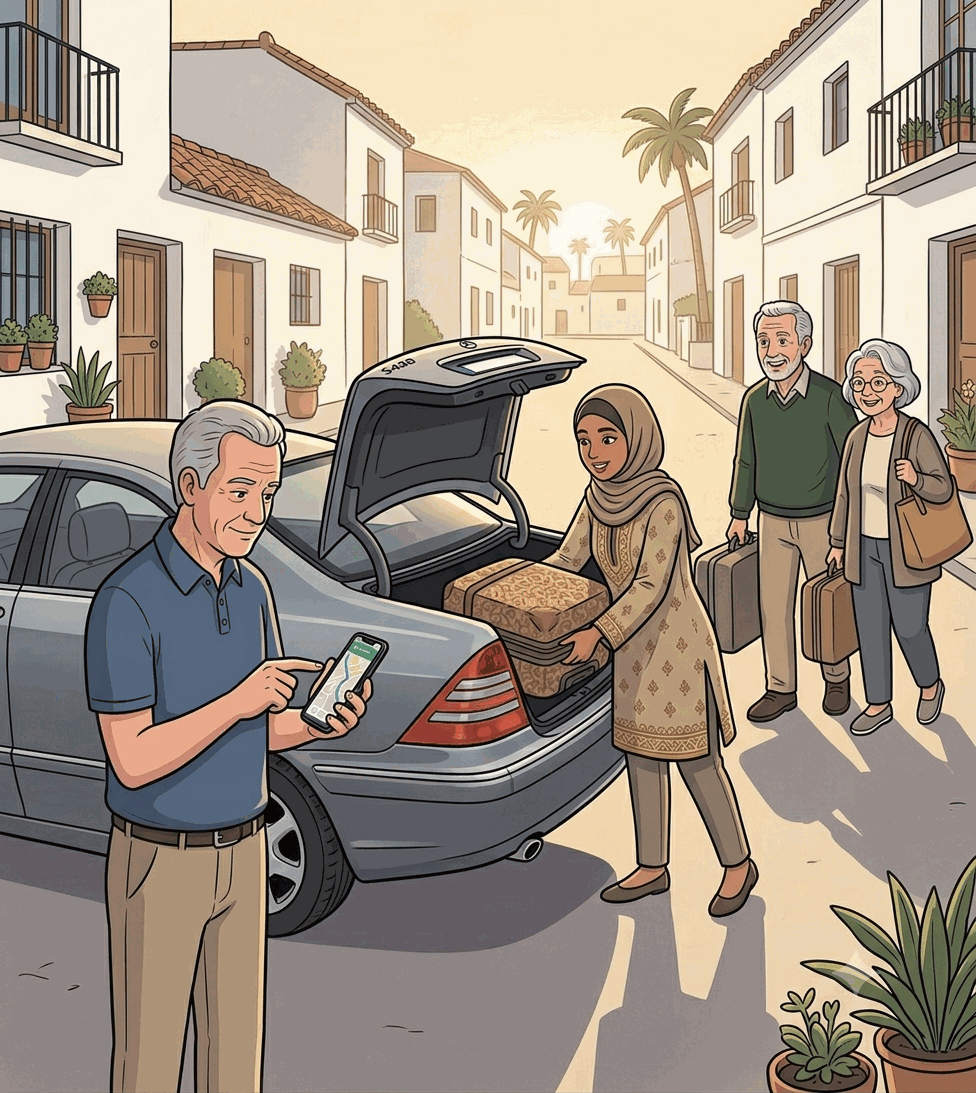
It's Friday morning, 25th February 2022, the start of the Andalusia long weekend. Julio and Itto are getting ready in the living room, while Cristóbal and Consuelo are arriving at the house with their bags. "We're leaving at nine o'clock sharp," says Julio, checking the map on his phone. Itto is packing the last bag into the car boot of the Mercedes, next to Cristóbal's suitcase. "Are we stopping for breakfast on the motorway?" asks Consuelo, fastening her seatbelt in the back seat. "Yes, we're stopping at a service station near Murcia," Itto replies. Cristóbal is checking the tyres one last time, because he always worries about long journeys. At half past nine, the Mercedes finally leaves La Cañada. "José Luis is expecting us for dinner in Valencia," Julio reminds everyone. "He's cooking paella tonight," Itto adds, smiling. The four of them are travelling together for the first time, and the mood in the car is happy and excited, full of anticipation for the six days ahead.
Forma: sujeto + am/is/are + verbo-ing.
Uso especial: cuando va acompañado de un marcador temporal futuro (today, tonight, on Friday, next week...), expresa un plan ya organizado, con hora y lugar concretos, no una acción que ocurre ahora mismo.
Ejemplos: We're leaving at nine o'clock. José Luis is expecting us for dinner.
Nota de contraste (se ampliará en la Sesión 2): compara con be going to, que expresa una intención sin horario fijo.
1. suitcase /ˈsuːtkeɪs/ — maleta.
2. to pack /tʊ pæk/ — hacer la maleta, empaquetar.
3. route /ruːt/ — ruta.
4. motorway /ˈməʊtəweɪ/ — autopista.
5. service station /ˈsɜːvɪs ˌsteɪʃn/ — área de servicio.
6. to set off /tʊ set ɒf/ — ponerse en marcha.
7. seatbelt /ˈsiːtbelt/ — cinturón de seguridad.
8. car boot /kɑː buːt/ — maletero.
9. tyre /ˈtaɪə/ — neumático.
10. journey /ˈdʒɜːni/ — viaje, trayecto.
En parejas, planificad un viaje ficticio de fin de semana usando presente continuo para plasmar planes ya agendados (We're leaving on..., We're staying at..., We're visiting...).
1. Escribe 5 frases sobre tus planes agendados para el próximo fin de semana, usando presente continuo.
Un compañero de trabajo, hablante nativo de inglés, pregunta a Julio por WhatsApp qué planes tiene para el puente de Andalucía.
Tarea: El alumnado, actuando de mediador, explica en inglés sencillo (usando presente continuo) los planes del grupo, a partir de la información que Julio da en español.
Madonna — "Don't Cry For Me Argentina" (1996)
Mientras escuchas, anota si detectas alguna forma verbal en presente continuo (verbo + -ing) y a qué crees que se refiere.
SdA 5 · Clase 2
Bienvenida entrañable: de Valencia a Badalona · Be going to (intenciones)
| Bloque | Min | Contenido |
|---|---|---|
| 1. Listening | 10 | Escucha de la narración + comprensión global |
| 2. Reading | 15 | The Story + comprensión detallada |
| 3. Language Lab | 25 | Be + going to (intenciones) |
| 4. Vocabulary Lab | 15 | 10 palabras clave |
| 5. Production | 15 | Speaking + Writing guiados |
| 6. Mediation | 8 | Mediación lingüística |
| 7. Sing Along | 2 | Meat Loaf — "Two Out Of Three Ain't Bad" (1977) |
Escucha el audio de la narración (sin leer el texto) y marca Verdadero (V) o Falso (F).
🎧 Coloca el archivo audio/sda5_sesion2_story.mp3 junto a este HTML para que suene aquí.
1. José Luis waves goodbye on Saturday morning. →
2. They are going to visit Itto's cousin in Badalona. →
3. They don't stop for lunch on the way. →
4. Aurelia is waiting for them at the door. →
5. Cristóbal and Consuelo sleep in the guest room. →
Bienvenida entrañable: de Valencia a Badalona
🎧 Coloca el archivo audio/sda5_sesion2_story.mp3 junto a este HTML para que suene aquí.
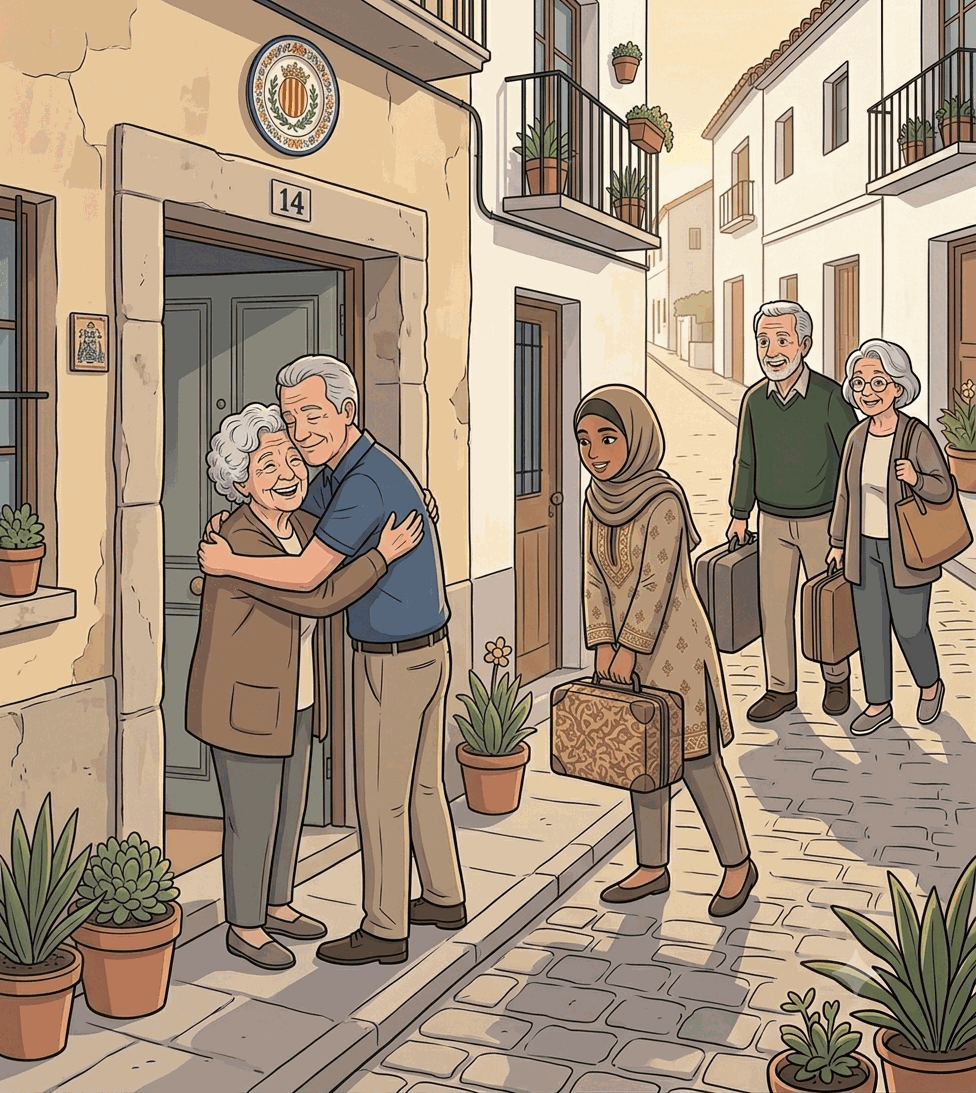
On Saturday morning, José Luis waves goodbye at the door of his flat in Valencia. "Thank you for the paella and the guest room," says Itto, giving him a warm hug. "We're going to visit my cousin Aurelia in Badalona today," Julio explains. "She's like a grandmother to me — when I was a little boy, she used to stay for long periods with my parents, keeping our grandmother María del Carmen company." The Mercedes sets off again along the motorway towards Catalonia. After a few hours, Consuelo asks, "Are we going to stop for lunch on the way?" "Yes, we're going to have lunch at a service station near Castellón," Itto answers. In the early evening, they finally arrive in Badalona. Aurelia is waiting at the door, and her face lights up with joy. "My dear Julio!" she says, hugging him tightly. "You're going to sleep in the guest room, and Cristóbal and Consuelo can have the spare bed in the study." That night, over a homemade dinner, Aurelia tells old family stories, and Julio listens with a full heart, remembering his childhood.
Forma: sujeto + am/is/are + going to + verbo base.
Uso: para hablar de intenciones y decisiones ya tomadas antes del momento de hablar, sin necesidad de horario fijo.
Ejemplos: We're going to visit Aurelia today. You're going to sleep in the guest room.
Contraste: a diferencia del presente continuo (Sesión 1), going to expresa una intención general, no un plan con hora y lugar ya cerrados.
1. guest room /gest ruːm/ — habitación de invitados.
2. spare bed /speə bed/ — cama supletoria.
3. to stay overnight /tʊ steɪ ˌəʊvəˈnaɪt/ — pasar la noche.
4. host /həʊst/ — anfitrión.
5. guest /gest/ — invitado.
6. to welcome /tʊ ˈwelkəm/ — dar la bienvenida.
7. hug /hʌg/ — abrazo.
8. homemade /ˌhəʊmˈmeɪd/ — casero.
9. doorbell /ˈdɔːbel/ — timbre.
10. warmly /ˈwɔːmli/ — calurosamente, con cariño.
En parejas, imaginad que vais a visitar a un familiar este fin de semana. Habla de tus intenciones usando going to (What are you going to do? Where are you going to stay?).
1. Escribe 5 frases sobre tus intenciones para las próximas vacaciones, usando be + going to.
Aurelia, que no habla inglés, quiere saber qué planes tiene el grupo para el día siguiente, pero un vecino de habla inglesa se lo pregunta directamente a Consuelo.
Tarea: El alumnado media entre Aurelia (español) y el vecino (inglés), explicando en inglés sencillo las intenciones del grupo con be + going to.
Meat Loaf — "Two Out Of Three Ain't Bad" (1977)
Mientras escuchas, anota si detectas la expresión "going to" (o su forma coloquial "gonna") en la letra, y qué crees que anuncia el cantante que va a hacer.
SdA 5 · Clase 3
Lluvia en el camino: de Badalona a Eibar · Will (pronósticos y decisiones espontáneas)
| Bloque | Min | Contenido |
|---|---|---|
| 1. Listening | 10 | Escucha de la narración + comprensión global |
| 2. Reading | 15 | The Story + comprensión detallada |
| 3. Language Lab | 25 | Will (pronósticos y decisiones espontáneas) |
| 4. Vocabulary Lab | 15 | 10 palabras clave |
| 5. Production | 15 | Speaking + Writing guiados |
| 6. Mediation | 8 | Mediación lingüística |
| 7. Sing Along | 2 | Michael Bolton — "A Love So Beautiful" (1995) |
Escucha el audio de la narración (sin leer el texto) y marca Verdadero (V) o Falso (F).
🎧 Coloca el archivo audio/sda5_sesion3_story.mp3 junto a este HTML para que suene aquí.
1. Aurelia gives them biscuits for the road. →
2. Julio thinks they will arrive in Eibar in the afternoon. →
3. Cristóbal thinks the mountain roads will be slower. →
4. It doesn't rain during the journey. →
5. Saadia greets them with a long conversation. →
Lluvia en el camino: de Badalona a Eibar

🎧 Coloca el archivo audio/sda5_sesion3_story.mp3 junto a este HTML para que suene aquí.
On Sunday morning, Aurelia gives them a bag of homemade biscuits for the road. "It will be a very long journey today," says Julio, looking at the map. "I think we'll arrive in Eibar around eight o'clock in the evening." Consuelo asks, "Will there be a lot of traffic on a Sunday?" "Probably not too much," Cristóbal answers, "but the mountain roads near the Basque Country will be slower." Itto takes the first turn driving, and Julio rests his eyes for a while. After several hours, dark clouds appear in the sky. "I think it will rain soon," Itto says, and a few minutes later, heavy rain starts to fall. "Don't worry," says Julio, "the roads will be fine, we'll just drive more carefully." They stop once for petrol and once more at a service station, where Consuelo insists on paying for everyone's coffee. Finally, tired but happy, they arrive at Saadia's house in Eibar. She opens the door quietly and smiles. "Welcome," she says softly, showing them to their rooms without much fuss, already thinking about tomorrow's trip to Bilbao.
Forma: sujeto + will/won't + verbo base (contracción 'll), igual para todas las personas.
Usos: 1) predicciones u opiniones sobre el futuro — I think it will rain; 2) decisiones tomadas en el mismo momento de hablar — Don't worry, we'll drive more carefully.
Contraste: a diferencia de be going to (Sesión 2), will no implica un plan previo, sino una opinión, promesa o reacción espontánea.
1. to drive /tʊ draɪv/ — conducir.
2. traffic /ˈtræfɪk/ — tráfico.
3. mountain pass /ˈmaʊntɪn pɑːs/ — puerto de montaña.
4. petrol /ˈpetrəl/ — gasolina.
5. toll /təʊl/ — peaje.
6. roadworks /ˈrəʊdwɜːks/ — obras en la carretera.
7. exit /ˈeksɪt/ — salida (de autopista).
8. distance /ˈdɪstəns/ — distancia.
9. clouds /klaʊdz/ — nubes.
10. to rest /tʊ rest/ — descansar.
En parejas, haced predicciones sobre el tiempo y el tráfico de un viaje imaginario, usando will/won't.
1. Escribe 5 predicciones sobre cómo crees que será tu próximo fin de semana, usando will.
Saadia, que apenas habla, necesita que alguien explique a un vecino vasco de habla inglesa cuántos días se van a quedar los visitantes.
Tarea: El alumnado media brevemente la información (en inglés sencillo, usando will para predicciones sobre la estancia) a partir de los datos que Itto aporta en español.
Michael Bolton — "A Love So Beautiful" (1995)
Mientras escuchas, anota si oyes la contracción "'ll" o la palabra "will" en algún momento, y qué predicción o promesa crees que expresa el cantante.
SdA 5 · Clase 4
Un día por el País Vasco: Bilbao y San Sebastián · Vocabulario de viajes y monumentos

| Bloque | Min | Contenido |
|---|---|---|
| 1. Listening | 10 | Escucha de la narración + comprensión global |
| 2. Reading | 15 | The Story + comprensión detallada |
| 3. Language Lab | 25 | Repaso integrado: presente continuo / going to / will |
| 4. Vocabulary Lab | 15 | 10 palabras clave: viajes y monumentos |
| 5. Production | 15 | Speaking + Writing guiados |
| 6. Mediation | 8 | Mediación lingüística |
| 7. Sing Along | 2 | Neil Diamond — "The Story Of My Life" (1986) |
Escucha el audio de la narración (sin leer el texto) y marca Verdadero (V) o Falso (F).
🎧 Coloca el archivo audio/sda5_sesion4_story.mp3 junto a este HTML para que suene aquí.
1. There are no classes on 28th February because it's Día de Andalucía. →
2. Saadia stays at home instead of coming to Bilbao. →
3. They visit the Guggenheim Museum in the morning. →
4. Saadia orders fish at the restaurant. →
5. It is calm and windless at San Sebastián. →
Un día por el País Vasco: Bilbao y San Sebastián
🎧 Coloca el archivo audio/sda5_sesion4_story.mp3 junto a este HTML para que suene aquí.
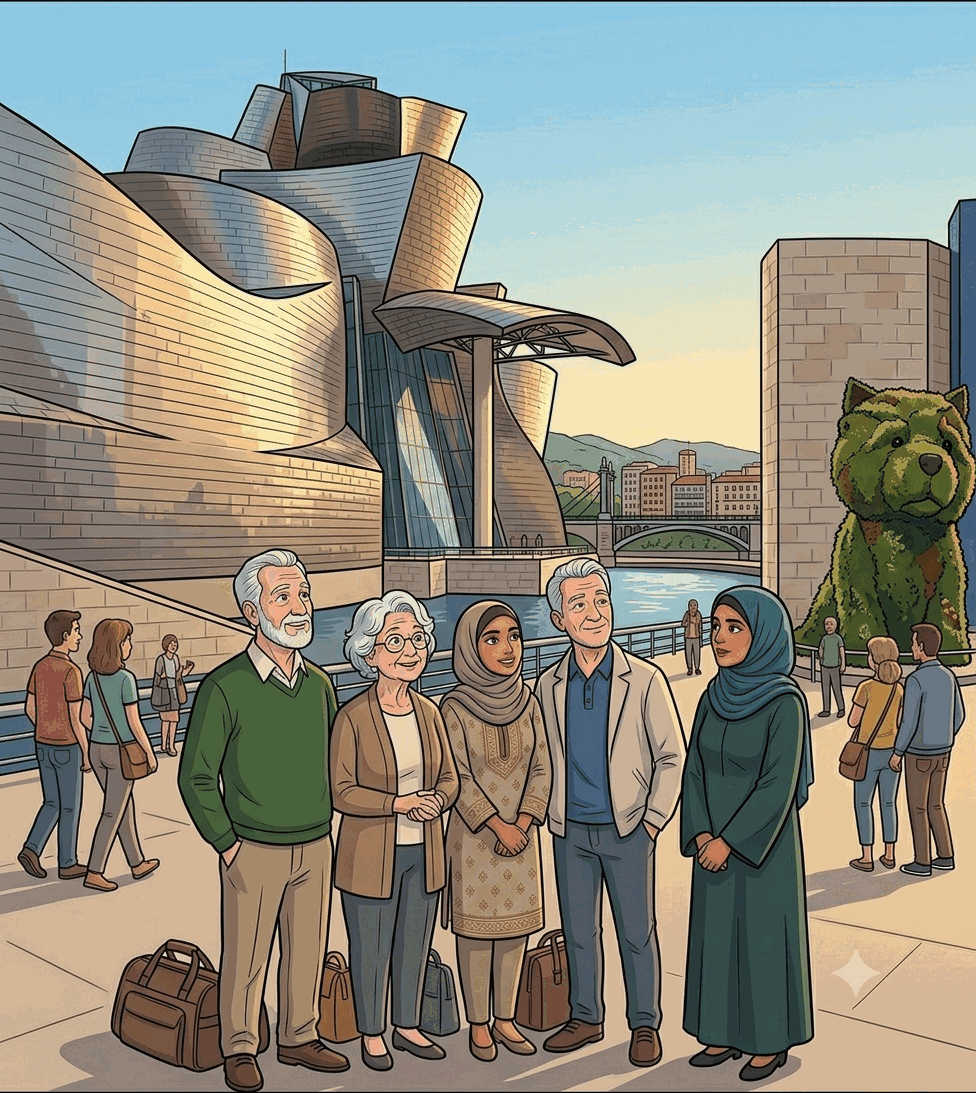
It's Monday, 28th February, the Día de Andalucía, so there are no classes today. Saadia is coming with them to Bilbao, though she prefers listening to talking. "We're visiting the Guggenheim Museum this morning," Julio announces, checking his guidebook. At the entrance, Consuelo buys five admission tickets, while Cristóbal takes photos of the strange, shiny building. Inside, Itto loves the modern art, though she doesn't understand all of it. Around one o'clock, they walk to a small Moroccan restaurant that Saadia loves. "I'm going to order a tagine," says Saadia quietly, the first full sentence she has said all morning. The waiter recommends the mint tea, and everyone agrees it's delicious. In the afternoon, they drive to San Sebastián to see the famous Playa de la Concha. "I think it will be windy near the sea," warns Cristóbal, and he's right — a strong wind blows along the beach promenade. Consuelo buys a small souvenir for her granddaughter. Late in the evening, on the way back, they stop for a while in the quiet forest near Mondragón, close to Eibar, enjoying a few minutes of silence under the trees before returning to Saadia's house.
En esta sesión combinamos las tres formas de futuro trabajadas: presente continuo para planes ya agendados con hora/lugar concretos (We're visiting the museum at ten); be going to para intenciones y decisiones ya tomadas (I'm going to order a tagine); will para predicciones u opiniones sobre lo que va a pasar (I think it will be windy). Identifica en cada frase cuál es la forma más adecuada según el contexto.
1. museum /mjuˈziːəm/ — museo.
2. beach promenade /biːtʃ ˌprɒməˈnɑːd/ — paseo marítimo.
3. view /vjuː/ — vista.
4. monument /ˈmɒnjʊmənt/ — monumento.
5. guidebook /ˈgaɪdbʊk/ — guía turística.
6. souvenir /ˌsuːvəˈnɪə/ — recuerdo (de viaje).
7. admission ticket /ədˈmɪʃn ˈtɪkɪt/ — entrada.
8. windy /ˈwɪndi/ — ventoso.
9. to recommend /tʊ ˌrekəˈmend/ — recomendar.
10. shiny /ˈʃaɪni/ — brillante, reluciente.
En parejas, planificad una visita turística de un día combinando las tres formas de futuro (We're visiting..., We're going to see..., I think it will be...).
1. Escribe un breve párrafo (5-6 frases) describiendo un día de turismo ideal, usando al menos una frase de cada estructura de futuro trabajada.
En el Museo Guggenheim, un turista extranjero pregunta a Cristóbal, en inglés, qué van a visitar por la tarde.
Tarea: El alumnado media la respuesta de Cristóbal (dada en español) al turista, usando las tres formas de futuro según corresponda.
Neil Diamond — "The Story Of My Life" (1986)
Mientras escuchas, intenta detectar alguna de las tres formas de futuro trabajadas hoy (presente continuo, going to, will) y anota una frase, con tus propias palabras, que resuma lo que el cantante planea o predice.
SdA 5 · Clase 5
Rumbo al sur: de Eibar a Madrid · Integración de futuro + must/have to
| Bloque | Min | Contenido |
|---|---|---|
| 1. Listening | 10 | Escucha de la narración + comprensión global |
| 2. Reading | 15 | The Story + comprensión detallada |
| 3. Language Lab | 25 | Integración de futuro + must/have to |
| 4. Vocabulary Lab | 15 | 10 palabras clave |
| 5. Production | 15 | Speaking + Writing guiados |
| 6. Mediation | 8 | Mediación lingüística |
| 7. Sing Along | 2 | Nina Simone — "Don't Let Me Be Misunderstood" (1964) |
Escucha el audio de la narración (sin leer el texto) y marca Verdadero (V) o Falso (F).
🎧 Coloca el archivo audio/sda5_sesion5_story.mp3 junto a este HTML para que suene aquí.
1. Saadia says goodbye with a long, noisy farewell. →
2. They stay one night in Madrid. →
3. Cristóbal says you don't need any documents at the hotel. →
4. Itto thinks the Valle de los Caídos will be impressive. →
5. They plan to leave late the next morning. →
Rumbo al sur: de Eibar a Madrid
🎧 Coloca el archivo audio/sda5_sesion5_story.mp3 junto a este HTML para que suene aquí.
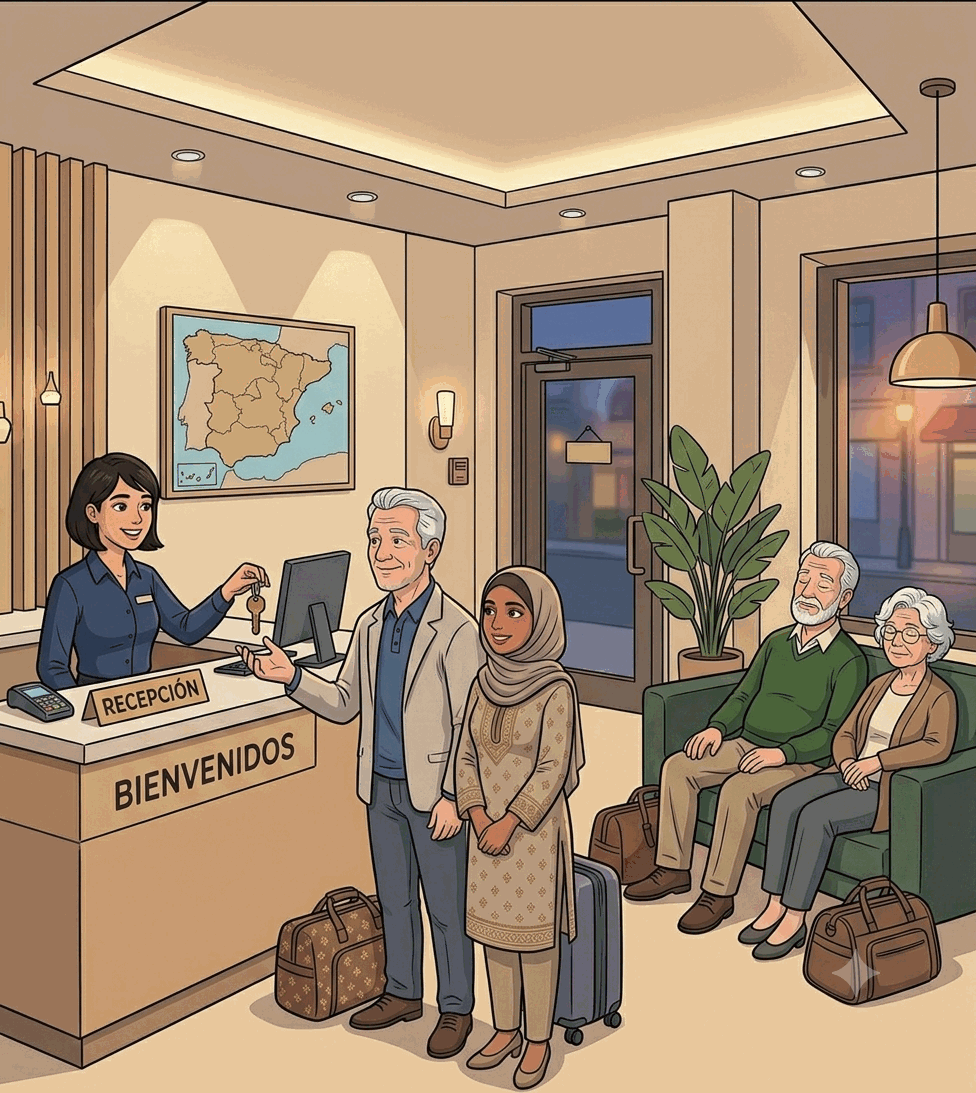
Early on Tuesday morning, Saadia says goodbye with a quiet hug, promising to visit Almería one day. "We're driving to Madrid today," Julio explains, "and we're going to stay one night there before the last stretch home." "You must show your identity card at the hotel reception," Cristóbal reminds everyone, an old habit from his working years. The journey south is long, and by early afternoon they stop near the Valle de los Caídos. "I think this place will be very impressive," says Itto, looking at the huge stone monument in the distance. They walk around for a while, mostly in silence, reflecting on the history of the place. In the evening, they finally check in at a small hotel near Madrid. The receptionist smiles and says, "Your room is on the second floor, down the corridor on the right." Consuelo, exhausted, sits in the lobby for a moment before going up. "Tomorrow we're leaving early," Julio says, "because it's a long way back to Almería, and we have to arrive before dark." Everyone agrees, and they go to bed early, ready for the final day of their long journey.
Repasamos juntas las tres formas de futuro y añadimos must / have to para expresar obligación en el contexto de viaje.
Must: obligación fuerte, a menudo impuesta por una norma — You must show your ID.
Have to: obligación externa, más habitual en el habla cotidiana — We have to arrive before dark.
Forma negativa mustn't: prohibición — You mustn't forget your luggage.
1. hotel room /həʊˈtel ruːm/ — habitación de hotel.
2. receptionist /rɪˈsepʃənɪst/ — recepcionista.
3. to check in /tʊ tʃek ɪn/ — registrarse (en el hotel).
4. identity card /aɪˈdentɪti kɑːd/ — carné de identidad.
5. luggage /ˈlʌgɪdʒ/ — equipaje.
6. lobby /ˈlɒbi/ — vestíbulo.
7. to book /tʊ bʊk/ — reservar.
8. corridor /ˈkɒrɪdɔː/ — pasillo.
9. must /mʌst/ — deber (obligación).
10. have to /hæv tʊ/ — tener que.
En parejas, simulad el check-in en un hotel: uno es el/la recepcionista, el otro es el/la cliente, usando must/have to y las formas de futuro trabajadas.
1. Escribe 5 frases sobre las normas y obligaciones de un hotel o de un viaje, usando must/have to.
Un turista de habla inglesa, en la recepción del hotel, no entiende bien las normas que el recepcionista español está explicando (en español) sobre horarios y documentación.
Tarea: El alumnado media la explicación del recepcionista al turista, usando must/have to y alguna forma de futuro.
Nina Simone — "Don't Let Me Be Misunderstood" (1964)
Mientras escuchas, anota si detectas alguna palabra relacionada con obligación, deseo o predicción, y relaciona el tono de la canción con el del viaje de vuelta.
SdA 5 · Clase 6
Feria de repaso: un viaje inolvidable
| Bloque | Min | Contenido |
|---|---|---|
| 1. Review | 10 | Repaso de gramática consolidada |
| 2. Vocabulary Review | 15 | Repaso de vocabulario |
| 3. Final Quiz | 25 | Cuestionario final de 10 preguntas |
| 4. Roleplay | 30 | Roleplay grupal de repaso |
| 5. Sing Along | 10 | Repaso musical de la unidad |
Presente continuo (planes agendados) · Be + going to (intenciones) · Will (pronósticos y decisiones espontáneas) · Must/have to (obligación) · Vocabulario de viajes, alojamiento y monumentos
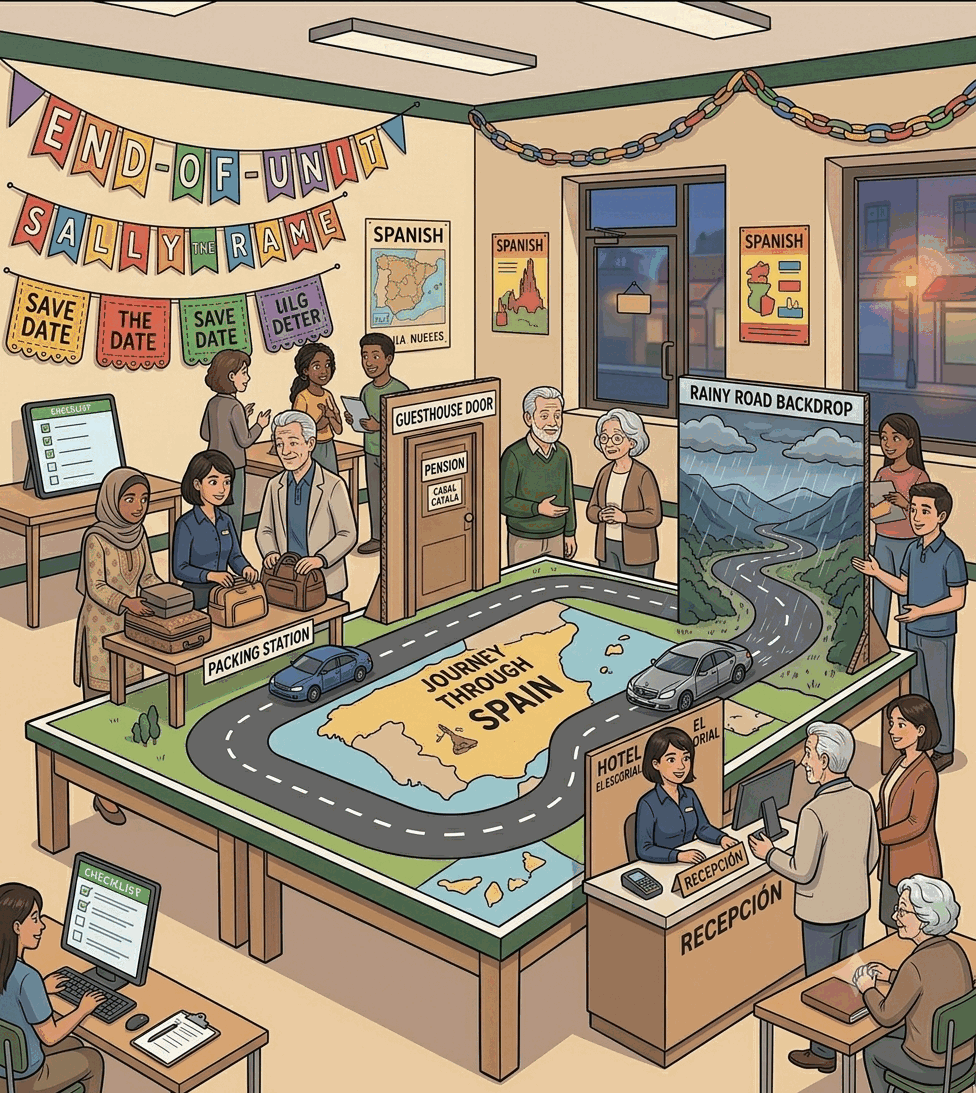
"Planning a Road Trip": en grupos de 4-5 personas, planificad un viaje largo en coche por etapas, usando las tres formas de futuro y must/have to en cada etapa (salida, parada, alojamiento, visita turística, vuelta), repartiendo los papeles de conductor/a, copiloto y anfitriones en cada parada. En cada etapa, producid 2-3 frases usando la gramática de la unidad.
Oscar Benton — "Bensonhurst Blues" (1973)
Escucha de cierre de la unidad.
Repasamos las seis canciones de esta SdA: Madonna — "Don't Cry For Me Argentina" (1996), Meat Loaf — "Two Out Of Three Ain't Bad" (1977), Michael Bolton — "A Love So Beautiful" (1995), Neil Diamond — "The Story Of My Life" (1986), Nina Simone — "Don't Let Me Be Misunderstood" (1964), Oscar Benton — "Bensonhurst Blues" (1973).