
SEP Alkayasí · CEPER 500 Viviendas
SEP Alkayasí · CEPER 500 Viviendas
SdA 3 · Clase 1
Instalándose: la nueva casa de Itto · Have got · There is / are (repaso) · Preposiciones de lugar

| Bloque | Min | Contenido |
|---|---|---|
| 1. Listening | 10 | Escucha de la narración + comprensión global |
| 2. Reading | 15 | The Story + comprensión detallada |
| 3. Language Lab | 25 | Have got · There is / are (repaso) · Preposiciones de lugar |
| 4. Vocabulary Lab | 15 | 10 palabras clave |
| 5. Production | 15 | Speaking + Writing guiados |
| 6. Mediation | 8 | Mediación lingüística |
| 7. Sing Along | 2 | Elvis Presley — "You Don't Have To Say You Love Me" (1966) |
Escucha el audio de la narración (sin leer el texto) y marca Verdadero (V) o Falso (F).
🎧 Coloca el archivo audio/sda3_sesion1_story.mp3 junto a este HTML para que suene aquí.
1. Itto arrives at the house in November 2020. →
2. The house has got four storeys. →
3. There is a swimming pool on the roof terrace. →
4. One bedroom is now Julio's study. →
5. The main bedroom hasn't got a bathroom. →
6. There is a patio behind the house. →
7. From the terrace, Itto can see the mountains. →
8. Itto likes the house very much. →
Instalándose: la nueva casa de Itto
🎧 Coloca el archivo audio/sda3_sesion1_story.mp3 junto a este HTML para que suene aquí.
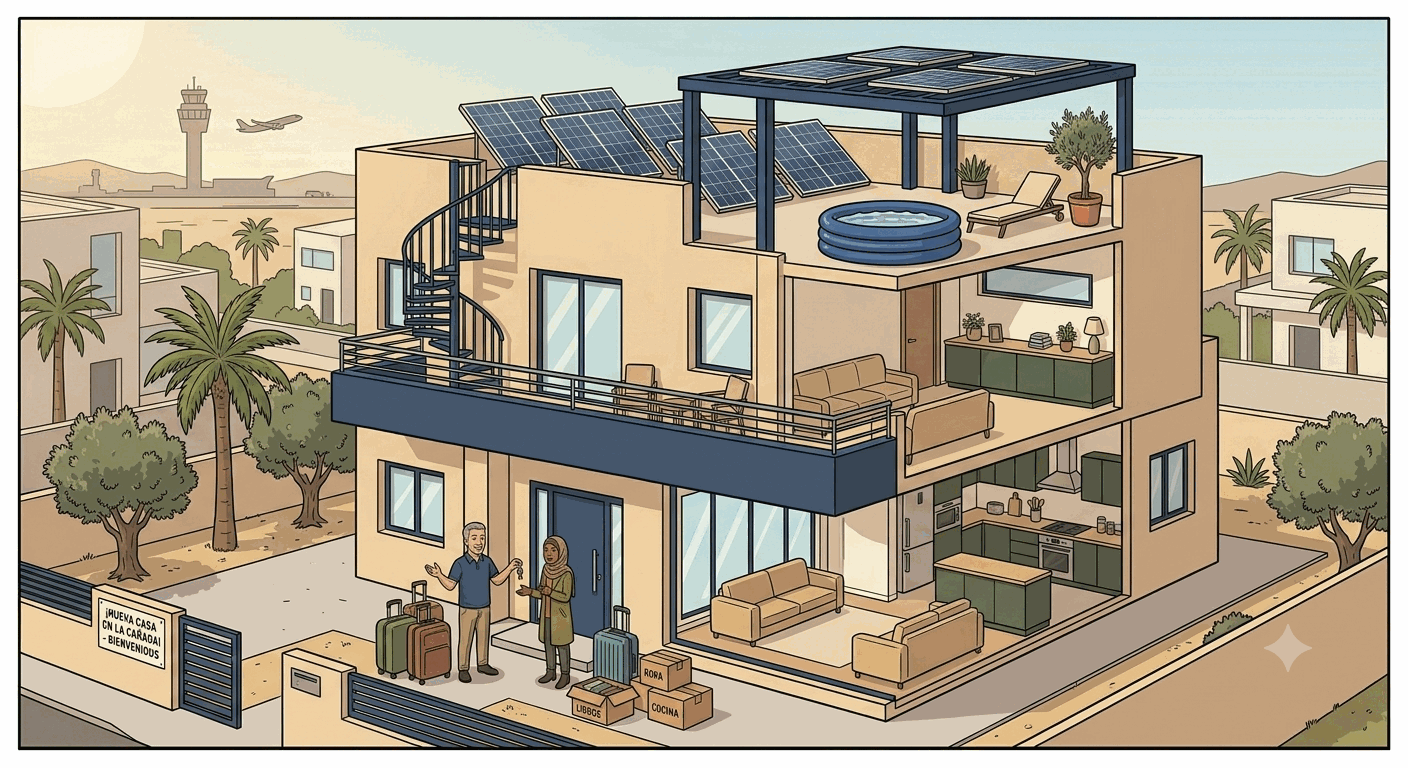
Itto's new home is in La Cañada, near the airport and Costacabana beach. It's a three-storey house. In the basement, there is a garage. On the ground floor, there is a big living room, a kitchen, and a bathroom with a shower. There is also a patio behind the house, with a barbecue and a place for the washing machine. On the first floor, there are three bedrooms. Julio uses one bedroom as a study. The main bedroom has got an en-suite bathroom and a door to a balcony. From the balcony, a spiral staircase goes up to the roof terrace. The roof terrace is Itto's favourite place. There is a small paddling pool, some solar panels, and a table with chairs. "Look at that view!" says Itto. "I can see the sea, the airport, and Cabo de Gata." Julio smiles. "Welcome home," he says.
HAVE GOT (posesión): The house has got three bedrooms. / It hasn't got a swimming pool, but it's got a paddling pool. / Has it got a garage? Yes, it has.
THERE IS / THERE ARE (existencia): There is a garage in the basement. There are three bedrooms on the first floor.
PREPOSICIONES DE LUGAR: in, on, behind, next to, in front of, under, near.
1. garage /gəˈrɑːʒ/ — garaje.
2. living room /ˈlɪvɪŋ ruːm/ — salón.
3. kitchen /ˈkɪtʃɪn/ — cocina.
4. bathroom /ˈbɑːθruːm/ — baño.
5. bedroom /ˈbedruːm/ — dormitorio.
6. roof terrace /ruːf ˈterəs/ — terraza (azotea).
7. staircase /ˈsteəkeɪs/ — escalera.
8. balcony /ˈbælkəni/ — balcón.
9. solar panel /ˈsəʊlə ˈpænl/ — placa solar.
10. patio /ˈpætiəʊ/ — patio.
En parejas: describe tu propia vivienda a tu compañero/a usando have got. Guion de apoyo: My house has got... / It hasn't got... / There is / are...
1. Escribe 5 frases sobre tu propia vivienda, usando al menos 2 veces have got y 1 vez there is/are.
Julio explica a Consuelo (nivel más básico) cómo es la nueva casa, con frases muy simples. Consuelo repite y completa los huecos.
Tarea: JULIO: Consuelo, listen. The house has got three bedrooms.
CONSUELO: The house has got ___ bedrooms. (three)
JULIO: There is a paddling pool on the terrace.
CONSUELO: There is a ___ on the terrace. (paddling pool)
JULIO: The main bedroom has got an en-suite bathroom.
CONSUELO: Very nice, Julio! Congratulations.
Elvis Presley — "You Don't Have To Say You Love Me" (1966)
Busca en la letra alguna expresión con have/has (have got) y anótala en su contexto.
SdA 3 · Clase 2
Una gran familia · Genitivo sajón · Vocabulario de parentesco

| Bloque | Min | Contenido |
|---|---|---|
| 1. Listening | 10 | Escucha de la narración + comprensión global |
| 2. Reading | 15 | The Story + comprensión detallada |
| 3. Language Lab | 25 | Genitivo sajón · Vocabulario de parentesco |
| 4. Vocabulary Lab | 15 | 10 palabras clave |
| 5. Production | 15 | Speaking + Writing guiados |
| 6. Mediation | 8 | Mediación lingüística |
| 7. Sing Along | 2 | Engelbert Humperdinck — "How I Love You" (1993) |
Escucha el audio de la narración (sin leer el texto) y marca Verdadero (V) o Falso (F).
🎧 Coloca el archivo audio/sda3_sesion2_story.mp3 junto a este HTML para que suene aquí.
1. Zahra is Itto's sister. →
2. Zahra works in a school. →
3. Tarik's English is very good. →
4. Majda is Zahra's daughter. →
5. Hamid lives in Morocco. →
6. Itto has got four brothers and two sisters. →
7. Julio doesn't like Itto's family. →
8. Majda is studying. →
Una gran familia

🎧 Coloca el archivo audio/sda3_sesion2_story.mp3 junto a este HTML para que suene aquí.
Itto has got a big family. Her parents, Ali and Fatima, live in Ouaoumana, in Morocco. Itto is the youngest of seven brothers and sisters. Her sister Zahra lives in La Cañada, near Julio's house. Zahra's children are Tarik and Majda. Tarik's English is very good, and Majda is a young student. Itto's brother Hamid lives near Cabo de Gata. Hamid's son is called Amir. "Family is very important to me," says Itto. Julio smiles. "Now it's my family too," he says.
GENITIVO SAJÓN ('s / s'): Zahra's daughter is Majda. Itto's brother is Hamid. Ali and Fatima's children are seven. (Con plural terminado en -s, solo se añade apóstrofo: the parents' house.)
1. father /ˈfɑːðə/ — padre.
2. mother /ˈmʌðə/ — madre.
3. sister /ˈsɪstə/ — hermana.
4. brother /ˈbrʌðə/ — hermano.
5. niece /niːs/ — sobrina.
6. nephew /ˈnefjuː/ — sobrino.
7. husband /ˈhʌzbənd/ — marido.
8. wife /waɪf/ — esposa.
9. parents /ˈpeərənts/ — padres.
10. family /ˈfæməli/ — familia.
En parejas, con tarjetas/fotos de familiares: "Whose is this?" — "This is Itto's brother."
1. Describe tu propio árbol familiar usando el genitivo sajón (mínimo 4 frases).
Rogelio, muy curioso y detallista, pregunta con precisión el parentesco de cada personaje; Julio e Itto responden pacientemente con frases estructuradas.
Tarea: ROGELIO: Excuse me, Itto. Is Tarik your nephew or your brother?
ITTO: He's my nephew. He's Zahra's son.
ROGELIO: And Majda — is she Zahra's daughter too?
ITTO: Yes, that's right. Majda is Zahra's daughter.
ROGELIO: Thank you, Itto. Now I understand the family tree.
Engelbert Humperdinck — "How I Love You" (1993)
Anota si aparece alguna palabra de familia o de sentimientos (love, family, dear...) relacionada con esta sesión.
SdA 3 · Clase 3
Preparativos de la boda · Pronombres objeto · Vocabulario de celebraciones



| Bloque | Min | Contenido |
|---|---|---|
| 1. Listening | 10 | Escucha de la narración + comprensión global |
| 2. Reading | 15 | The Story + comprensión detallada |
| 3. Language Lab | 25 | Pronombres objeto · Vocabulario de celebraciones |
| 4. Vocabulary Lab | 15 | 10 palabras clave |
| 5. Production | 15 | Speaking + Writing guiados |
| 6. Mediation | 8 | Mediación lingüística |
| 7. Sing Along | 2 | Eric Clapton — "River Of Tears" (1998) |
Escucha el audio de la narración (sin leer el texto) y marca Verdadero (V) o Falso (F).
🎧 Coloca el archivo audio/sda3_sesion3_story.mp3 junto a este HTML para que suene aquí.
1. The wedding will be in Serón. →
2. Itto wants to invite a lot of people. →
3. Julio will invite his son David. →
4. Itto will call her brother and sister. →
5. The wedding is in April. →
6. Julio gives an invitation to Zahra. →
7. The wedding is a big party with many guests. →
8. The date of the wedding is the first of March. →
Preparativos de la boda
🎧 Coloca el archivo audio/sda3_sesion3_story.mp3 junto a este HTML para que suene aquí.
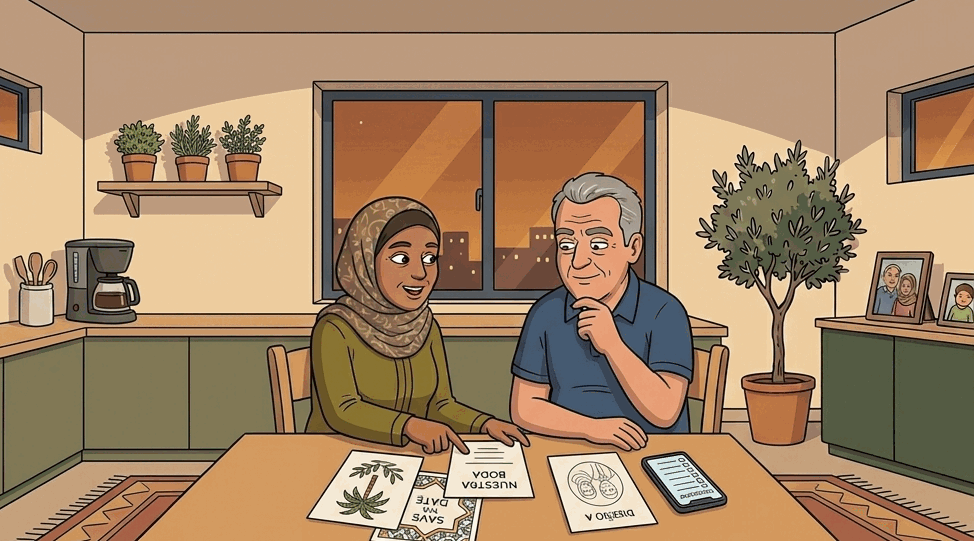
Julio and Itto are planning their wedding. "Let's invite my sister and my brother," says Itto. "I'll call them tomorrow." Julio nods. "And David, my son — I'll invite him too." They choose simple invitations. "Give it to Zahra when you see her," says Itto to Julio. The wedding will be small: just the family, in Serón, on the first of March.
PRONOMBRES OBJETO: me, you, him, her, it, us, them. Ejemplos: Invite them. Give it to her. Call him tomorrow.
1. wedding /ˈwedɪŋ/ — boda.
2. invitation /ˌɪnvɪˈteɪʃən/ — invitación.
3. guest /gest/ — invitado/a.
4. ceremony /ˈserəməni/ — ceremonia.
5. celebration /ˌseləˈbreɪʃən/ — celebración.
6. gift /gɪft/ — regalo.
7. dress /dres/ — vestido.
8. suit /suːt/ — traje.
9. flowers /ˈflaʊəz/ — flores.
10. cake /keɪk/ — tarta.
Role-play breve en parejas: invita a alguien a una boda (ofrecer, aceptar o disculparse).
1. Escribe un mensaje corto de invitación a la boda (5-6 líneas).
Carmen y Francisco ayudan a Tarik (sobrino de Itto, alumno ocasional) a redactar la lista de invitados en inglés sencillo.
Tarea: CARMEN: Tarik, can you help us write the guest list?
TARIK: Of course. Who do we invite?
FRANCISCO: Write: Zahra, Hamid, and David.
TARIK: OK. I'll write it in English: "Guests: Zahra, Hamid, David."
CARMEN: Perfect, thank you, Tarik!
Eric Clapton — "River Of Tears" (1998)
Busca 2 pronombres objeto (him, her, it, me...) en la letra, si aparecen.
SdA 3 · Clase 4
El día en el Juzgado de Paz · Posesivos en profundidad · repaso have got + genitivo

| Bloque | Min | Contenido |
|---|---|---|
| 1. Listening | 10 | Escucha de la narración + comprensión global |
| 2. Reading | 15 | The Story + comprensión detallada |
| 3. Language Lab | 25 | Posesivos en profundidad · repaso have got + genitivo |
| 4. Vocabulary Lab | 15 | 10 palabras clave |
| 5. Production | 15 | Speaking + Writing guiados |
| 6. Mediation | 8 | Mediación lingüística |
| 7. Sing Along | 2 | J. J. Cale — "Money Talks" (2001) |
Escucha el audio de la narración (sin leer el texto) y marca Verdadero (V) o Falso (F).
🎧 Coloca el archivo audio/sda3_sesion4_story.mp3 junto a este HTML para que suene aquí.
1. The wedding is on the first of March 2021. →
2. The ceremony is at a church. →
3. Zahra and Hamid are at the wedding. →
4. David doesn't come to the wedding. →
5. Itto wears a simple dress. →
6. Julio wears jeans. →
7. After the ceremony, they have lunch together. →
8. It is a very big ceremony with many guests. →
El día en el Juzgado de Paz

🎧 Coloca el archivo audio/sda3_sesion4_story.mp3 junto a este HTML para que suene aquí.
On the first of March 2021, Julio and Itto get married at the Juzgado de Paz in Serón. It's a small, intimate ceremony. Zahra and Hamid, Itto's sister and brother, are there. David, Julio's son, comes too — his relationship with his father isn't easy, but he wants to be there for this day. Itto wears a simple, elegant dress. Julio wears his best suit. After the ceremony, the small group has lunch together. "This is our day," says Itto, holding Julio's hand.
REPASO INTEGRADO: posesivos (my/mine, her/hers, his...) + genitivo sajón + have got, aplicados al contexto de la boda. Ejemplo: This is Itto's dress. It's hers. The wedding has got a small guest list.
1. bride /braɪd/ — novia.
2. groom /gruːm/ — novio.
3. civil ceremony /ˈsɪvəl ˈserəməni/ — ceremonia civil.
4. witness /ˈwɪtnəs/ — testigo.
5. register /ˈredʒɪstə/ — registro.
6. rings /rɪŋz/ — anillos.
7. vows /vaʊz/ — votos.
8. photograph /ˈfəʊtəgrɑːf/ — fotografía.
9. reception /rɪˈsepʃən/ — convite/recepción.
10. toast /təʊst/ — brindis.
Describe la boda apoyándote en la fotografía real de la ceremonia en Serón.
1. Escribe un breve párrafo titulado "The best day" (4-5 frases).
Pilar, algo tímida, pide a Julio que le explique con frases sencillas quién es quién en la fotografía de la boda.
Tarea: PILAR: Julio, who is this in the photo?
JULIO: This is Zahra, Itto's sister.
PILAR: And this man?
JULIO: That's Hamid, Itto's brother. And this is David, my son.
PILAR: What a lovely photo, Julio. Congratulations again!
J. J. Cale — "Money Talks" (2001)
Anota si aparece algún posesivo (mine, his, hers, ours...) en la letra.
SdA 3 · Clase 5
Dos bodas, dos tradiciones · Comparativos sencillos · Vocabulario de tradiciones (interculturalidad)


| Bloque | Min | Contenido |
|---|---|---|
| 1. Listening | 10 | Escucha de la narración + comprensión global |
| 2. Reading | 15 | The Story + comprensión detallada |
| 3. Language Lab | 25 | Comparativos sencillos · Vocabulario de tradiciones (interculturalidad) |
| 4. Vocabulary Lab | 15 | 10 palabras clave |
| 5. Production | 15 | Speaking + Writing guiados |
| 6. Mediation | 8 | Mediación lingüística |
| 7. Sing Along | 2 | Janis Joplin — "Little Girl Blue" (1969) |
Escucha el audio de la narración (sin leer el texto) y marca Verdadero (V) o Falso (F).
🎧 Coloca el archivo audio/sda3_sesion5_story.mp3 junto a este HTML para que suene aquí.
1. The second wedding is in August 2021. →
2. The second wedding is at a hotel. →
3. The Moroccan wedding is a religious ceremony. →
4. Julio converts before the ceremony. →
5. Julio is a very religious man. →
6. The Moroccan wedding is less formal than the Spanish one. →
7. Itto is happy about having two weddings. →
8. The second wedding takes place in Morocco. →
Dos bodas, dos tradiciones
🎧 Coloca el archivo audio/sda3_sesion5_story.mp3 junto a este HTML para que suene aquí.
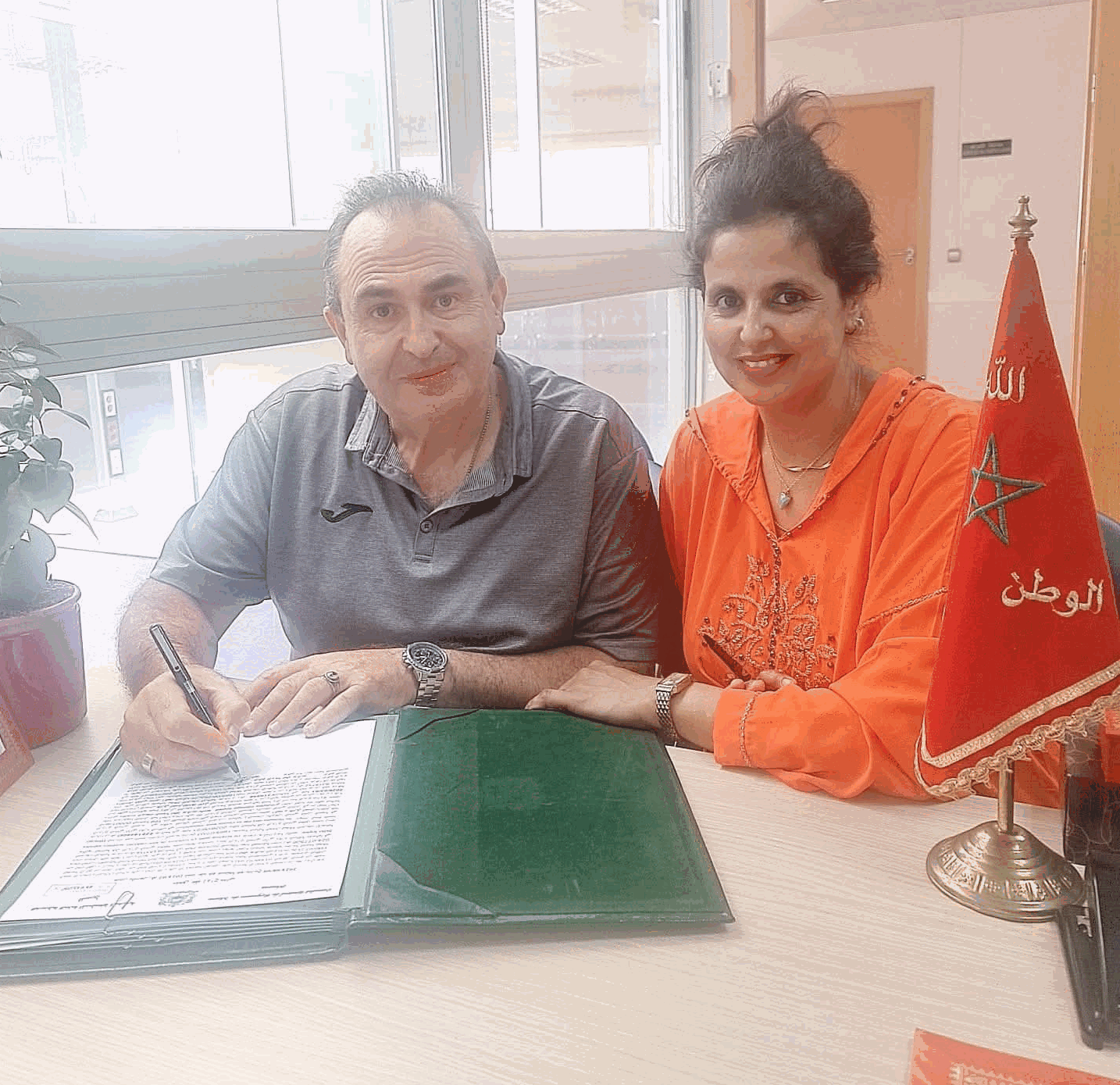
Julio and Itto have two weddings. The first is in Spain, at the Juzgado de Paz in Serón. It's a simple, informal ceremony with close family. The second is the Moroccan wedding — at the Consulate in Almería, in August 2021. This wedding is different: it's a religious ceremony, and it's more formal than the Spanish one. Moroccan traditions are quite strict, so Julio converts before the wedding, to respect Itto's family and customs. "Two countries, two traditions, one marriage," says Itto, smiling.
COMPARATIVOS SIMPLES A1: more formal than / different from / the same as / stricter than.
1. tradition /trəˈdɪʃən/ — tradición.
2. custom /ˈkʊstəm/ — costumbre.
3. culture /ˈkʊltʃə/ — cultura.
4. respect /rɪˈspekt/ — respeto.
5. consulate /ˈkɒnsjələt/ — consulado.
6. religion /rɪˈlɪdʒən/ — religión.
7. different /ˈdɪfrənt/ — diferente.
8. similar /ˈsɪmələ/ — similar.
9. formal /ˈfɔːməl/ — formal.
10. informal /ɪnˈfɔːməl/ — informal.
Compara una tradición de tu propia cultura con otra que conozcas (tono respetuoso, sin entrar en detalles doctrinales).
1. Escribe 3-4 frases comparando ambas bodas de Julio e Itto.
Itto explica a Consuelo y Cristóbal, con frases simples y respetuosas, por qué tuvieron dos bodas.
Tarea: CONSUELO: Itto, why did you have two weddings?
ITTO: One wedding is for Spain, and one is for Morocco. It's our tradition.
CRISTÓBAL: Is the Moroccan wedding very different?
ITTO: Yes, it's more formal, and it's a religious ceremony too.
CONSUELO: How interesting! Thank you for telling us, Itto.
Janis Joplin — "Little Girl Blue" (1969)
Busca algún comparativo (more... than, -er than) en la letra, si aparece.
SdA 3 · Clase 6
Feria de repaso: familia y bodas · have got, genitivo sajón, pronombres objeto, posesivos, comparativos simples
| Bloque | Min | Contenido |
|---|---|---|
| 1. Review | 20 | Repaso de gramática consolidada |
| 2. Vocabulary Review | 15 | Repaso de vocabulario |
| 3. Final Quiz | 25 | Cuestionario final de 10 preguntas |
| 4. Roleplay | 20 | Roleplay grupal de repaso |
| 5. Sing Along | 10 | Repaso musical de la unidad |
have got, genitivo sajón, pronombres objeto, posesivos, comparativos simples
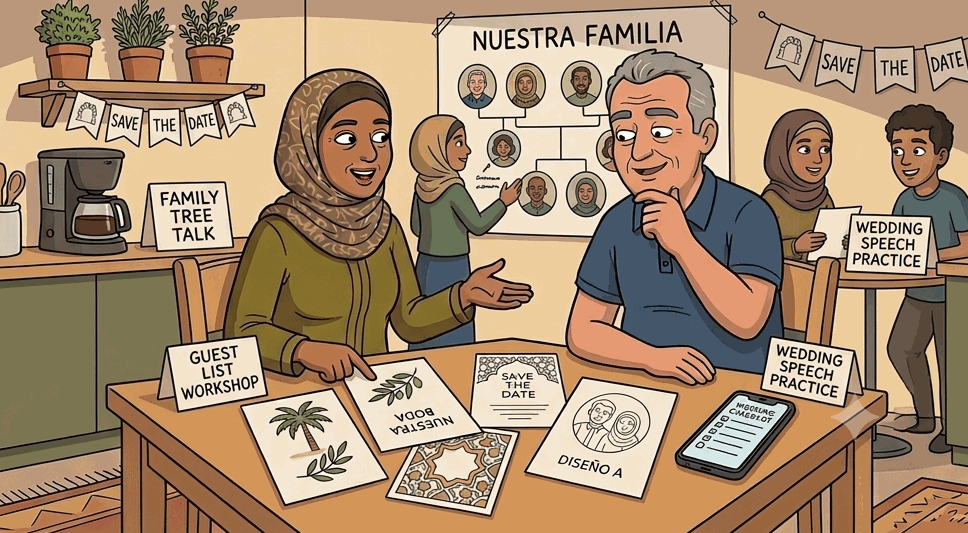
Cada alumno/a elige el papel de un invitado a una de las dos bodas (Zahra, Hamid, David, Consuelo, Cristóbal, Rogelio, Pilar, Carmen, Francisco o Tarik) y se presenta ante el grupo usando las estructuras trabajadas en la unidad: quién es, de quién es familiar o amigo/a, y qué recuerda de la boda a la que asistió.
Joan Baez — "The Partisan"
Cerramos la unidad de la boda escuchando esta canción; comenta en grupo qué sentimiento transmite. Repasamos las seis canciones de esta SdA: Elvis Presley — "You Don't Have To Say You Love Me" (1966), Engelbert Humperdinck — "How I Love You" (1993), Eric Clapton — "River Of Tears" (1998), J. J. Cale — "Money Talks" (2001), Janis Joplin — "Little Girl Blue" (1969), Joan Baez — "The Partisan".